Project Description:
For the final project I want to explore topics that I have found incredibly rich this semester. I have really enjoyed seeing the relationality between life and death and the various roles in play in film such as showing insights to religion or cultural beliefs or becoming a window for connectivity and mimesis. I want to explore the invisible aspects and how these forces are critical and also surrounding film as a whole without consuming the film. I want to explore death in its role in film in the more external relationship such as the driving force for In Her Own Time and Who Killed Vincent Chen, and in the more spiritual, internal influence such as the portrayal in Llanthupi Munakuy and Honk. I am not exactly sure which three I will end up with or if they will change.
I would also be interested in delving into this topic looking at the women involved in the film process as compared to men and the differences in approach as well as the role culture plays in these presentations. I would have loved more discussion on the inclusivity of documentation and the spaces that are held in the United States for other races, genders, and nationalities. I hope to have an element of how these identities affect the film as well. I also expect to do outside research to expand my knowledge of this influence and also look at the connection of spirits, memories of loved ones, and other invisible forces in film. What editing choices were made to create these forces such a noise, light, symbolism, and more. I look forward to using authors: de la Cadena, Gaines, Escobar, and Turner to further the dialogue for these questions. How are these forces invisible and what elements are visible? What effect are we not able to see? Can we assume any? Can death be made completely invisible in film?
Visibility of Death in Film from Women’s Perspectives
While death is always present in a film, it is usually regarded as invisible, overshadowed by the prevalence of life. Death, however, can have an important role by being the driving force or influence in a film, only made stronger by life instead of hidden. In Lynne Littman and Barbara Myeroff’s In Her Own Time, Vivia Font’s Honk, and Marcelina Cardenas’ Llanthupi Munakuy, death is made visible and makes moments for human connection. Further there is another layer of invisibility made visible with the strong female influence they have. Women are not commonly seen in a position of power behind the scenes of a film, yet these films exhibit the fruits of their agency.
In Arturo Escobar’s work in “In the Background of Our Culture: Rationalism, Ontological Dualism, and Relationality” he states that “in both academic and activist worlds, we are witnessing a renewed interest in the subordinated side of the dualisms across an entire spectrum of their manifestations, a sort of return of the repressed sides of the pairs as important dimensions of what constitutes life itself—for example, growing attention to emotions, feelings, the spiritual, matter, nonscientific knowledges, body and place, nonhumans, nonorganic life, death, and so forth” (Escobar 95). This is extremely relevant in looking at these invisible and “repressed sides” in film. There is an understanding that more needs to be done to make death more explicit due to its importance in the film.
In Her Own Time is Barbara’s last journey due to her terminal cancer and is immediately driven and produced with death in mind. The first scene we see is of her at the doctor’s office that allows the audience to understand Barbara’s condition (figure 1). It is then followed by her saying “this is not the film I started out to make” yet the illness allowed there to be another level to the film where the question of what happens after death in relation to religion is explored (02.47-02.50). The relationship that forms in the tensions between life and death in this film reveals moments of connectivity in a community that would not be possible had Barbara remained an outsider to the community. The transparency of Barbara allows the audience to understand multiple points of view in this community where the director “align[s] the viewer emotionally with a struggle that continues beyond the frame and into his or her real historical present” (Gaines 93).
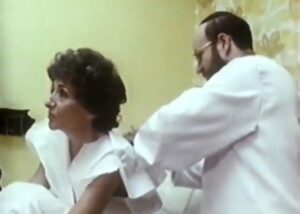
Figure 1: Barbara at the doctor’s office.
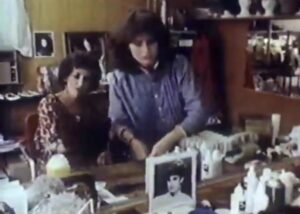
Figure 2: Barbara at the hairdresser.
The movie focuses on the community and spirituality as she becomes a part of this community and finds hope in her condition. She uses her life experiences and consistently brings up her limited time as a tool to understand a community. The impending death is embedded in every aspect of the film as a large focus is on Barbara and embraces her interactions. These moments of community are seen when she goes to the hairdresser, asks for a miracle, and her ritualistic divorce (figure 2, 3, 4). Garrett Stewart in “Thresholds of the Visible: The Death Scene of Film” says “the narrative scene of death seems to intersect with some implicit acknowledgment of that narrative death of immediacy which defines any film, its difference from and so deferral of reality,” however, the mimesis created allows for death to be perceived as real due to the driving force behind Barbara’s actions where death is made explicit and there is an invisible layer of grief in her journey (Stewart 35). This is especially evident in the end in her final interview segment where we see the impact of her ethnography and the knowledge of her death two weeks after (52.23-54.00).
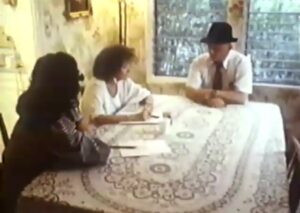
Figure 3: Barbara writing a letter for a miracle.

Figure 4: Barbara finalizing her divorce.
Through the lens of Barbara and her agency in shifting her original film and guiding her questions we get a female perspective of the community. There is a stronger interaction with the women of the households and the rabi. We get insight on the family dynamics and get visibility to the thoughts behind the structure. In one instance one of the women said “I think there’s a lot of confusion today if you’re a woman, because you’re expected to be everything. On the one hand, being a mother is not satisfying enough, working isn’t satisfying enough, I don’t feel that conflict as strongly. My feet are very firmly planted on the ground. I am an orthodox Jew and no contradiction in anything” (35. 39- 37.02). This quote is indicative of the satisfaction of the women in the community and the differences perceived on gender. Had the anthropologist been a man, and on top of that, one without an illness, the same visibility of life and death would not have been possible, and the interviews would lose their transforming effect.
Similarly, in the film Honk, the plot is driven from real life experiences of the screen writer and actress Vivia Font. There is a connection between death and memory that is made evident. Sound plays a huge role in this film with the noises of a hospital, the geese honking, and the ending with the sound of a baby’s cry. Death is made very visible in a dream-like state where a friend of the main character suddenly appears and ultimately disappears. This film is also the journey of a woman, moving towards a new stage in her life, yet needing comfort from someone who can no longer provide that physically. There is a relationality to nature and the surrounding world that allows death to create strong bonds between individuals and has the effect of mimesis on the viewer. This is evident in the green scenery and tranquility that it provides. There is this understanding of the connection of figures that are symbolic of death and the visibility they still have in everyday life. The film peels back layers into an internal monologue of grief and transition. There is a sense that her friend is still alive and plays with the “truth” of life and death, as Escobar writes “moderns imagine the world as an inanimate surface to be occupied; for many relational cultures, on the contrary, humans and other beings inhabit a world that is alive” (Escobar 87). The film embodies the essence of rebirth and illustrates the manipulation of reality through image as the characters interact, “screen images and “life” images will eternally mimic one another…that bodies on the screen could have their concrete connection with bodies in social space” (Gaines 94). While this interaction with memory and death is usually invisible to the eye, the film reveals the complexities of life after a loved one has died.
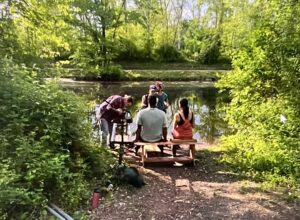
Figure 5
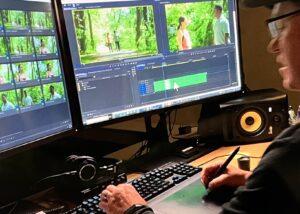
Figure 6
Figure 5 and 6: Images from the filming and editing of Honk
The complexities of childbirth and moments leading up to it are experiences only a woman would be able to have and is why this film being written by a woman is so important. While grief and a representation of a “ghost” might be replicated by a male writer, part of the impact of the film is this connection of death and birth simultaneously happening. It is the knowledge of transition and two juxtaposing figures in the main character’s life that in a way fight for her attention. Both figures become visible in her mind and physically as she finally gives birth and has to return to the invisibility of death. Looking at figure 7, the gap is alarming to see the limitations that gender provides in perspectives and the perpetuation of lack of opportunities for women. This graph is not even accounting for factors that have to do with race or culture that might lower the numbers even less depending on the demographic (Bielby 253).
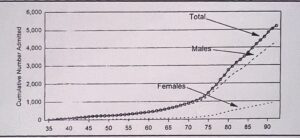
Figure 7: Cumulative number of Screenwriters (Bielby 1996)
Women being able to write and direct as Marcelina Cardenas focuses on the young woman’s perspective and her struggles in Llanthupi Munakuy. The women’s perspective is useful in showing elements of culture such as love and death that don’t revolve around war or focus solely on the men in charge of a community. The focus is on telling a story that is fictional but representative of their beliefs. The film focuses on Rosita who falls in love with Juancito, however, Rosita’s parents have already arranged a marriage for her and don’t want her with someone who is poor. The young couple plans to run away and in the process, Rosita keeps having dreams that allude to her untimely demise each night. After they run away, as she sneaks into her house, she suffers from an injury that results in her death. There is not a strong emphasis on her death scene showing the importance of the events afterwards and hiding the brutality of the murder. The focus aims at hiding the violence in death while making the death visible as physically as possible. Her spirit still remains and returns to Juancito where he tries to cure her, but it is only her soul. The director illustrates the grief of Juancito and her family as they perform rituals.
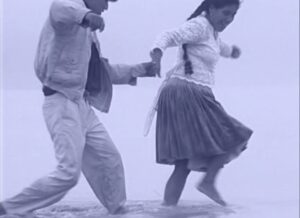
Figure 8
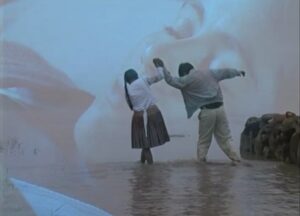
Figure 9
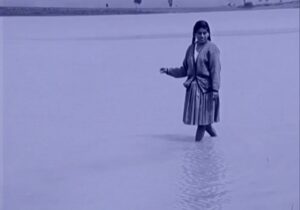
Figure 10
Figures 8, 9, and 10: The three dreams leading up to Rosita’s death
While traumatic, death is treated as normal and interlaced with the religion they practice. Rosita explains she stayed because of their love but she must return to their ancestors. Her dreams are mirrored as they enter the water and come out as a bird. Her dreams reveal a sort of destiny and illustrate death as a process in life but not the end. Her return as a soul made death apparent and was revealed to have been illustrated throughout the entirety of the film. There seems to be forms of reincarnation or continuation of life after death and merge those ideas together again. The film shows the “relations between human beings and other-than-human beings that together make place: mountains, rivers, crops, seeds, sheep, alpacas, llamas, pastures, plots, rocks-even dogs and hens” (de la Cadena 355-356).
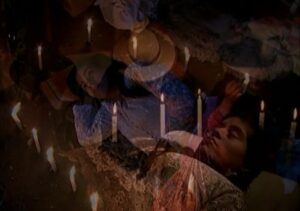
Figure 11: Juxtaposition of body and soul location
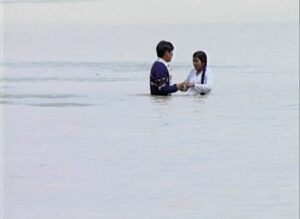
Figure 12: Connection between dreams and real life
There is a strong connection made between nature and humans, relating the continuation of life after death the way the natural life cycle does. This film is culturally significant and illustrates elements of family values, economic environment, and physical natural environment. There are also elements of culture in the dress of people and in the architecture of the community. This film can be understood to have an indigenous aesthetic and be a retelling of a known story that connects the community to their spiritual beliefs since “It is often undertaken by indigenous video-makers for the purpose of documenting that past to preserve it for future generations of their own peoples” (Turner 77). The film does not aim to define reality but rather to express cultural beliefs and use death as a tool to illustrate them.
The three films make death explicit and work towards making the previously hidden impact of death apparent. Each film illustrated grief in a different form and allowed death to create a storyline that was unique. Death cannot exist without life and as such is present in films and made visible. There is a connectivity that happens when death is highlighted and allows for a break back to reality and a comparison of image and self. Mimesis is also heightened through the violence death can produce although hidden in these films, but also in the connections to the characters a journey through the transition of life and death. They are both juxtaposed and equivalent. The influence of a woman in the creation of the films is also extremely important in relation to their perspectives on death. It is also important in the discourse that can be had comparing these films to similar genres but with male dominance. Ultimately it is important to understand “the industrial context, social networks, organizational arrangements, and the symbolic content of the commodities produced to fully understand the barriers to women’s full participation in the production of media narratives” and the way different perspectives are crucial to the pay of invisibility and visibility in all aspects of film (Bielby 267).
Work Cited:
Bielby, D. Denise, and Bielby, T. William. “WOMEN AND MEN IN FILM: Gender Inequality Among Writers in a Culture Industry.” Gender & Society, vol 10, issue 3, 1996, pp. 248-270. https://doi.org/10.1177/089124396010003004.
Cárdenas, Marcelina, et al. Llanthupi Munakuy: Quererse En Las Sombras = Loving Each Other in the Shadows. Distributed by TWN, 2001.
de la Cadena, Marisol. “INDIGENOUS COSMOPOLITICS IN THE ANDES: Conceptual Reflections beyond “Politics” Cultural Anthropology, University of California, Davis, 2010, pp. 334-364. https://doi.org/10.1111/j.1548-1360.2010.01061.x
Escobar, Arturo. “In the Background of Our Culture: Rationalism, Ontological Dualism, and Relationality.” Designs for the Pluriverse: Radical Interdependence, Autonomy, and the Making of Worlds, Duke University Press, Durham, North Carolina, 2017, pp. 79–104.
Honk (unreleased short film, with Producer Director Vivia Font)
Gaines, Jane. “Political Mimesis.” Collecting Visible Evidence, University of Minnesota, 1999, pp. 84-100.
Jayanti, Vikram, et al. In Her Own Time : Based on the Fieldwork of Barbara Myerhoff. Edited by Suzanne Pettit, Directed by Lynne Littman, Direct Cinema Limited, 1985.
Stewart, Garrett. “Thresholds of the Visible: The Death Scene of Film.” Mosaic: A Journal for the Interdisciplinary Study of Literature, vol. 16, no. 1/2, 1983, pp. 33–54. JSTOR, http://www.jstor.org/stable/24780385.
Turner, Terence. “Representation, Politics, and Cultural Imagination in Indigenous Video: General Points and Kayapo Examples.” Media Worlds: Anthropology on New Terrain, Berkeley: University of California Press, 2010, pp. 75-89.
Figure 5 and 6 from: http://www.viviafont.com/honk-the-film.html
