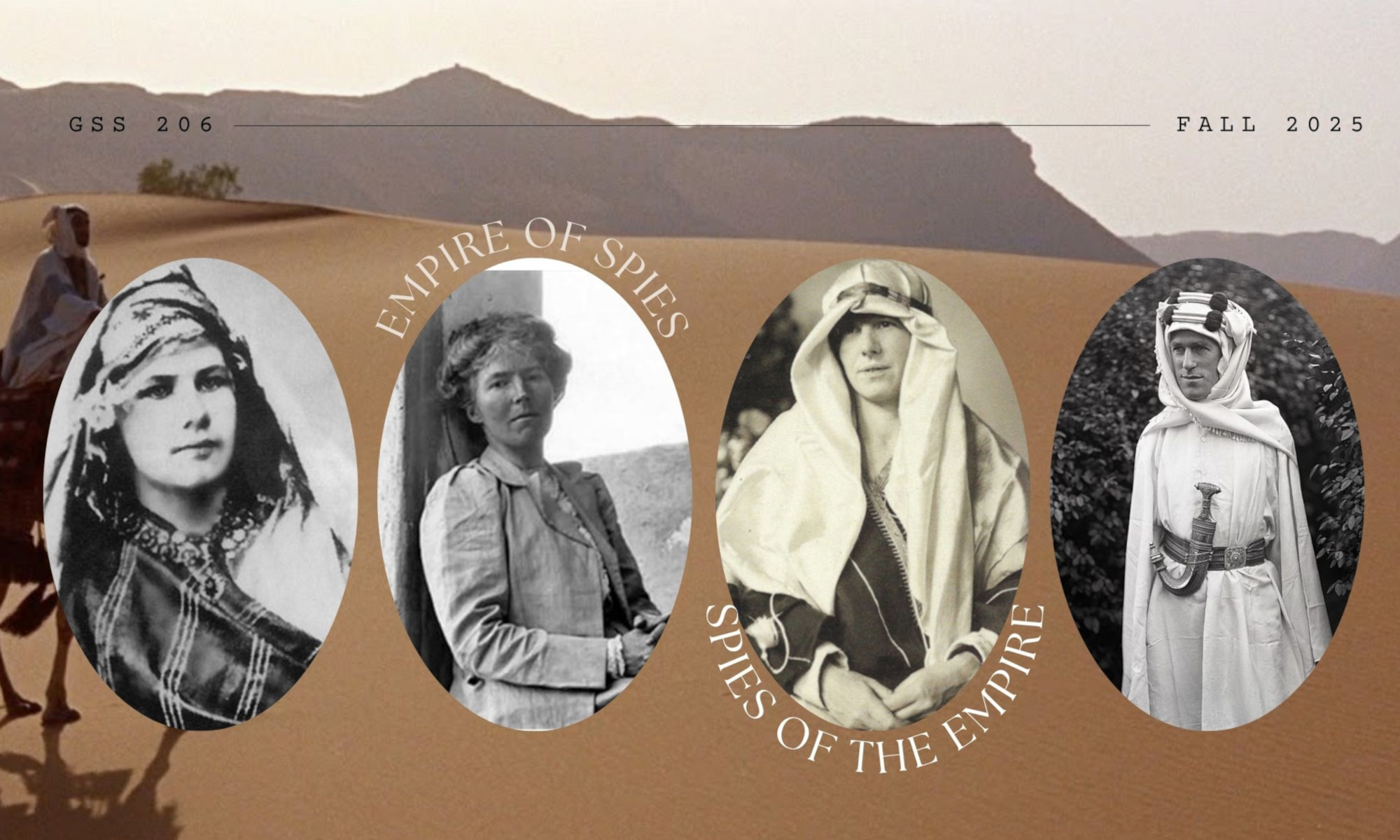
As we have spent a lot of time talking about Bell’s perception and how influential her actions have been towards both the Arabs and the British, we were unable to truly dive in deeper at specific chapters within A Woman in Arabia, so to provide some insight into why looking at “The ‘Person”, “The Lover”, and “The Courtier” is important to give us a holistic and deeper understanding of Bell and her beliefs/what she did in her life. As a recap: A Woman in Arabia was a recollection of Bell’s historical letters, military dispatches, diary entries, and travel writings to offer an intimate look at this woman who shaped nations.
The “Person”
Bell’s “antifeminism” wasn’t simple opposition to women’s rights, it was classed, contextual, and pragmatic. She came from an elite industrial family who believed in John Stuart Mill’s idea of women as rational “Persons”, but within a paternalist system. She shared her family’s view that suffrage required education and civic competence, and that women’s property laws had to change first. For her, it was a matter of readiness, not essence. Bell plays a double-coded role: too male for women, too female for men. She’s simultaneously insider and outsider, using her gender strategically in diplomacy. She’s performing masculinity to access power, while retaining femininity to humanize herself within male hierarchies. Her addressing the British wives of friends from Baghdad degradationally as in saying “A little woman” reaffirms how fractured she can also be as a woman in a predominantly male situated circumstances. Yet she also founded schools, hospitals, and women’s clubs in Baghdad and admired those who defied patriarchal restrictions. Always between categories Bell saw herself as a “Person” in the fullest Millian sense: self-directed, rational, and morally sovereign. Her feminism was paradoxical, personal rather than political, elitist yet emancipatory, compassionate but paternalistic.
The Lover
When Bell took up her post as “Major Miss Bell”, her work at the Intelligence Bureau was kept secret, much was omitted but letters was consistent. However there were a period of three days and three days in November 1915 where no letters came by aka love affair. Bell’s voice across diaries and letters is vivid, commanding, and self-scrutinizing: she organizes camps, nurses aides like Fattuh, curates social worlds, and narrates herself with both ironic wit and romantic candor. When soldier-diplomat Charles “Dick” Doughty-Wylie departs for Albania and secrecy tightens (destroyed letters, evasions to family), she chooses renunciation through motion, “the road and the dawn”, turning heartbreak into purpose as she heads back to the desert, converting private longing into a travel/work manifesto: if politics and society deny fulfillment, she will sublimate desire into maps, monuments, and manuscript pages addressed to him in everything but name.
This brings up the discussion where despite Bell’s likening towards the Arabs and taking their input and often defending them at times, wanting to unite them, as much a game or a way for her to move others around as a pawn for her own unfulfilled desires? Her espionage? Bell’s affection towards married men slowly turns her into an unreliable narrator, despite the plentitude of accounts of others writing on behalf of her and even through her own documented letters and words.
The Courtier
In her later Baghdad years, Gertrude Bell’s story becomes a meditation on power, gender, and the gaze of empire. Once central to Britain’s rule, her authority shrank with Iraq’s new constitution, and she redirected her energy toward archaeology (where she truly embraced becoming an archaeologist) writing the Law of Excavations, founding the Iraq Museum, and thus transforming personal loss of influence into cultural legacy. Her letters reveal both the intimacy and imbalance of her relationship with King Faisal: political dialogue shaded by affection, a romanticized vision of Arab nationhood melting into frustration at his “veering” character. Bell’s prose stages herself as both participant and observer, painting scenes of white robes, whirring fans, and emotional candor, asserting narrative control even as official control slipped away. Through her management of Faisal’s court, choosing Ghazi’s European suits, hiring an English governess, and instructing the queen’s household, she enacted a Western gaze that sought to civilize while sincerely admiring. Her “court-making” blended maternal guidance with imperial authority, a feminine performance of governance within male-dominated politics. As Stykes had once insulted her by calling her “A man woman”. Illness and financial worry “humanized” her final years, but she remained indomitable, writing, organizing, and advising until her health gave way. Within her letters, the commanding tone, vivid self-dramatization, and moral certitude construct a woman who, denied political freedom, found her version of “escape” and meaning in shaping memory of her devotion to the foundation of Iraq.
Furthermore, Bell’s letters and diaries (her life overall) reveal loneliness, yearning, and a fierce need to belong somewhere, neither accepted fully by the British establishment nor by the Arab world she loved. Faisal and others trusted her sincerity, even though her loyalty lay with Britain. She wrote about tribes and leaders with both fascination and condescension. Her letters often express admiration for Arab culture, yet they also reveal a belief that Arabs needed British guidance to “civilize” and govern themselves.
Zooming out–> is Bell truly the most “truthful” in her accounts of her life and life generally in Persia as well as with her travels and the founding of Iraq? Bell’s strategic elitism and anxiety about democracy leading to theocracy and also her imperial paternalism in balancing sects AND also being called “Enti Iraqiyah, enti badawiyah—you’re a Mesopotamian, a Beduin.” by King Faisal which was defining for her: a reassignment of identity, accepted as both insider and foreigner. However, not always is a reassignment of identity a positive concept, especially as a spy, whose job essentially is to balance both the “false” and the “truth” or their true beliefs/morals/values with the overall end game and goal of a alrger overarching empire. Bell also “archived” her present days through her photography and her documenting. Her gaze suspending the imperial colonialism, still seen true to this day in the Middle East through her choices, her actions, and her words.
At the very end, did Gertrude Bell die a hero of empire (a queen) or a victim of its contradictions?
Notes and post curated by: Nabiha

Ah…a victim of contradictions—poignant to think of her this way, certainly.
Glad you got to use some of your thoughts about the Arabian Woman reading assignment here… and capture the paradoxes well.