
True Blood is set in a world where vampires have recently come out of hiding due to the scientific advancement of a synthetic blood, True Blood. Sookie begins the show as a beautiful, innocent town weirdo. Everyone knows she can read minds, and in fact, she hates the trait herself. However, she realizes she cannot read the minds of vampires, and thus begins her many dramatic vampire affairs. The lore eventually grows and it is revealed that Sookie is a mindreader because she is part fairy (the show’s getting really bad…), which makes her blood alluring to vampires. Here is where my parallel really begins.
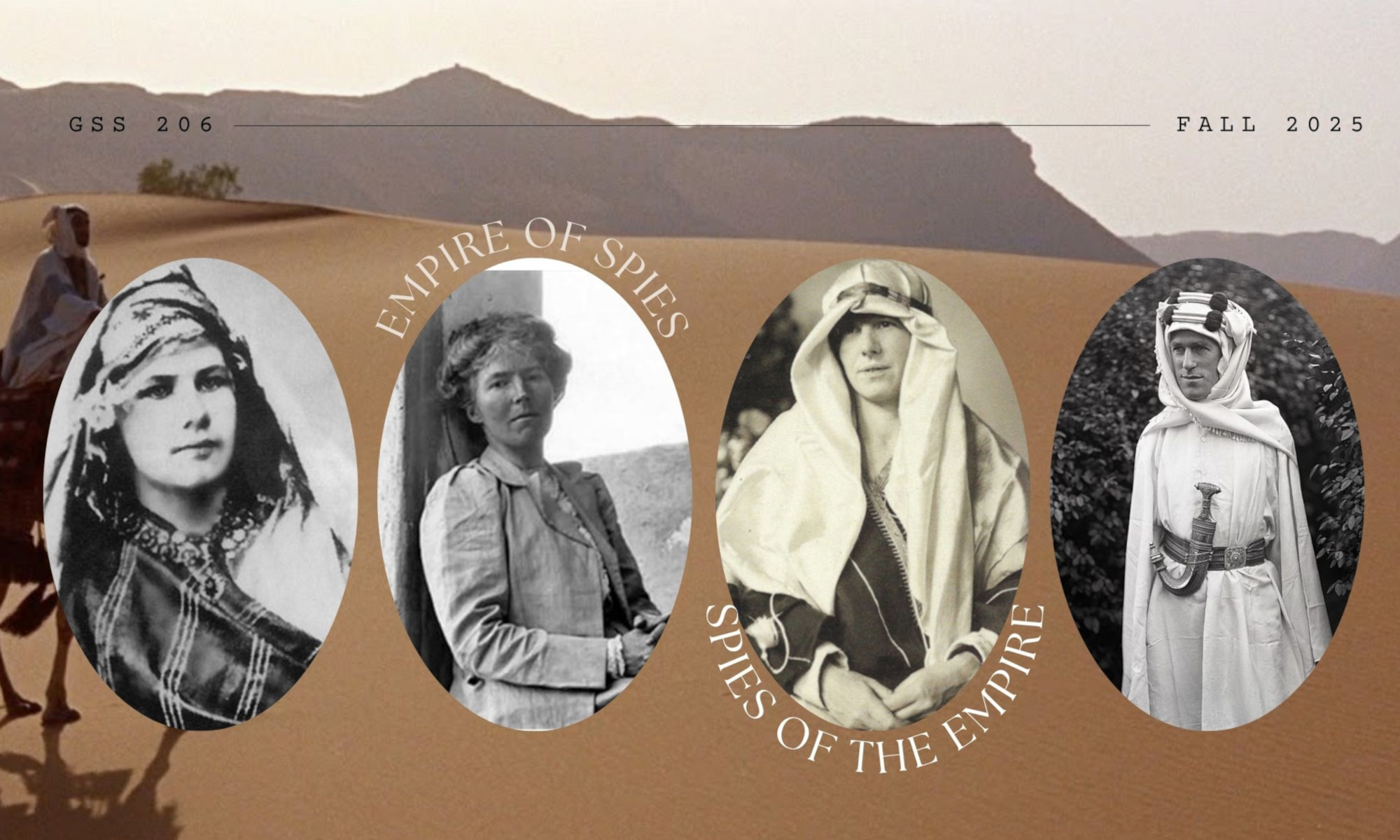
Lawrence, perhaps more than our other spies, was able to manage a balance of being an insider-outsider. While he donned an Arab drag, he wasn’t pretending to be Arab. He was able to travel between worlds because of his “ability to penetrate the inner self of the Arab individual” (Mousa 5). In relation to Arabs then, Lawrence had to be different. He was not one of the in-group; his relationships with Arabs was rooted in individuality, the recognition of difference. Like he says, “I can understand it enough to look at myself and other foreigners from their direction, and without condemning it. I know I’m a stranger to them, and always will be: but I cannot believe them worse, any more than I could change their ways” (Lawrence quoted in Garnett 156). Strangely, Sookie mirrors this insider-outsisder paradigm in her relationships with vampires. She can easily slip into their world because she is different. She doesn’t want to become a vampire or adopt their lifestyle, but they give her a reference point of normalcy–what she finds alluring about them. Furthermore, Sookie uses her ability to mind read to spy for vampires. She occupies human space (she visually appears human, can daywalk, and her power is invisible), but can also traverse the vampire world because of her fairy powers (which are based in light, and can therefore hurt vampires), her connections to the in-group, and the promise of her allure. She is both sympathetic and aggravating. She uses others, but gets used, and treats herself as the center of the universe. Her favorite line is: “If our relationship ever meant anything to you, you’d do this for me.”
Lawrence is somewhat the same. Mousa’s An Arab View and Theeb portrayed Lawrence as much less powerful than other iterations of his tale. He was simply a man in the right place at the right time with the right connections. Whatever role he did play in the Arab Revolt, it was exaggerated. He made promises he could not keep and we’ll never know if he actually thought he could make them happen. He used the Arabs for his own psychosexual, sado-masochistic exploration of the self through the east. He was a vampire! In the same way Sookie is, at least. Sookie spies for vampires but because she cannot read their intentions, often finds herself in situations where she has been cornered, manipulated, and even extorted by the very vampires she is psychosexually, sado-masochistially obsessed with (think: biting and blood, vampires are inherently tied to the concept of pain/consumption, fine line of pleasure/pain). Like Lawrence, she is both spy and insider-outsider, although she’s generally the one who ends up losing. I’d also argue she is sexually exploited in a way Lawrence was able to exploit others because of his rank. His gay love letters are described by Norton as “love letters from a slave to his master.” It brings up the question, how much information can one relationship have before it becomes exploitative? Could Sookie ever have a relationship with a vampire that doesn’t have a ridiculous power imbalance? With a human? Could Lawrence ever do the same with Arabs he claimed to love and work for? With his beloved Dahoum?
Spying necessitates betraying others, but in that, it must be wondered if that also means betraying oneself. Can one really love a person (or people) they exploit? It might be a reach, but to some extent all spy stories are vampiric.

1) I just think it’s wonderful to realize that a lot of colonists really were freaked out like that, which I think has to do heavily with the questions of vampirism you raise in your reading. My curiousity, I guess, is then about where/when/how this excrativism takes on an erotic valence? Does it ever? Does that raise the stakes of inquiry into Empire or does it subvert them? (I very clearly think the latter is not the answer, but this is about what you think and write, not me!)
2) I do think spying is a necessary betrayal of the self. The question more pertinent after, I think, is: are betrayals of the self not necessary and everyday? If not, why do you think so?
3) TRUE BLOOD LITERALLY ONLY HAD BADDIES IT WAS CRAZY. Anyways, this is how Peter O’Toole Newjeans fancams can still win…
To elaborate on question 2 a bit more…
If spying is conducted in a campaign against imperial forces—is the betrayal of one’s self heightened or diminished? Good questions raised by an even better post.
Loved the vampire parallels–spies as vampires makes sense to me!I do like the question Ayanna asks re the erotics of colonialism….which is definitely most obvious in the case of Lawrence and his relationships with Arab men–but which he is at pains to disguise.