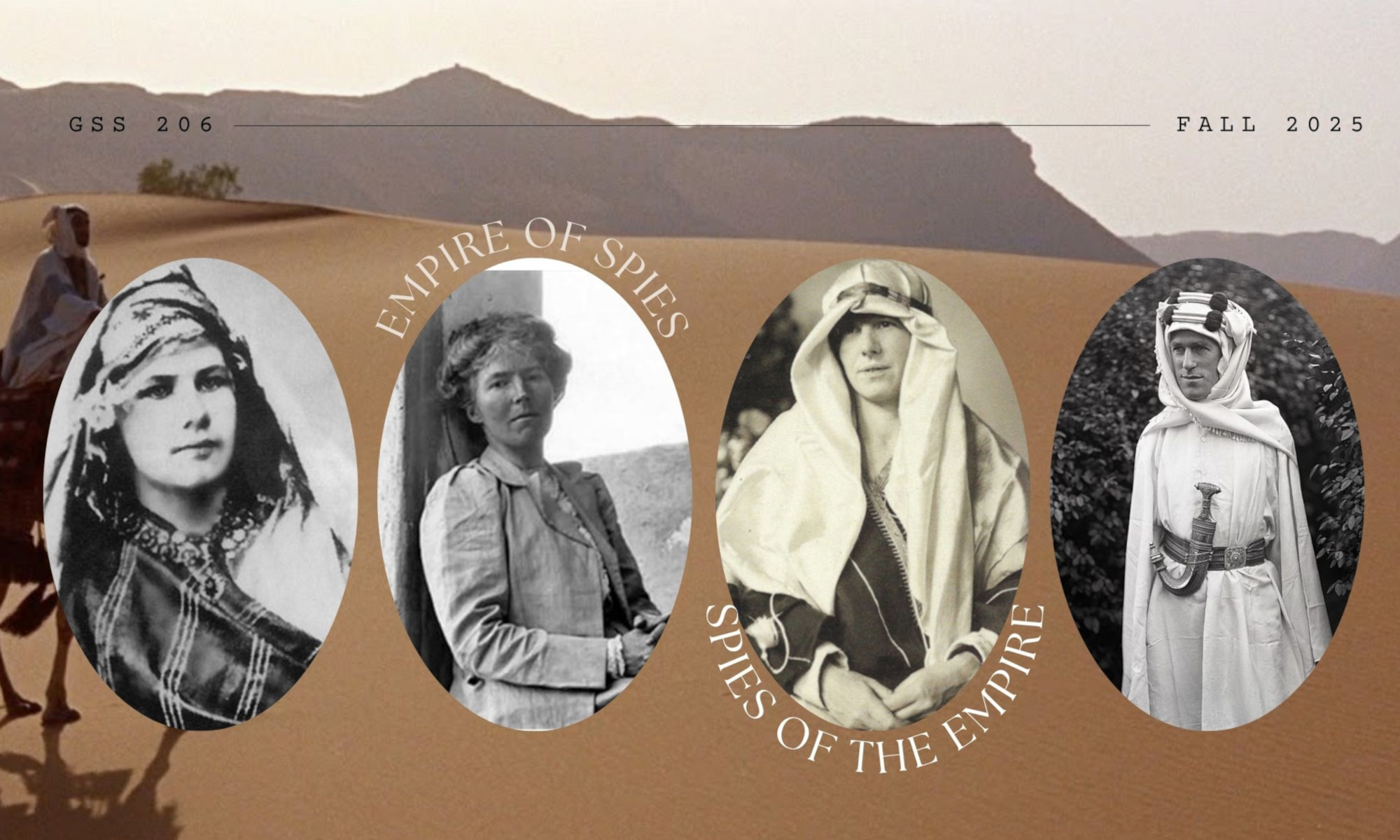
“The story of her birth is a novel in itself … Did she know who her father was? Did she invent one while disowning her parent? … A mystery never cleared up” (xvi from Introduction)
I couldn’t help but think about the variations of stories Isabelle told about her father. I believe Eberhardt deliberately crafted conflicting accounts about her father as a strategy of reinvention. These contradictions were not simply “personal confusion,” rather they became a tool she used to manipulate perception, gain trust, and adapt to different audiences. I think by revising her origin story again and again, she controlled her narrative, positioning herself to navigate new spaces and extract what she needed from others.
The mechanism here, I think, was subtle but powerful. By presenting one version of her father as noble or intellectual, she could invite admiration and open the door for others to share details about their own family backgrounds or cultural pride. By telling another story where her father was absent, illegitimate, or mysterious, she could evoke pity or curiosity, emotions that often lead people to reveal more about themselves in an effort to comfort or advise. Each story about her origins worked like bait: it caught people off guard just enough to open them up and draw them into conversation. In these moments of sympathy or intrigue, people likely gave up information they would not have shared in a straightforward exchange. The more uncertain they were about who she really was, the more they filled the gaps with their own disclosures. In that way, her stories didn’t just hide her, they actively pulled information from others.
This is part of what led me to a broader conclusion about Eberhardt: she was clearly a spy. She didn’t randomly decide to go to Algeria as a nomad; she was sent there with a purpose. While she may have developed genuine attachments to Islam and to Arabs along the way, these feelings do not erase her collaboration with the French government near the end of her life. In fact, her shifting emotions such as doubt, love, hatred, belonging, etc. fit the profile of someone working under cover. Her calculated and constant reinvention as well as her extreme efforts to gain trust all align more with her being a spy. If she were truly only a vagabond, she would not have needed to so carefully craft her identity or perform these elaborate acts of belonging.
That “unresolved mystery” and the way she weaponized narrative itself as both a mask and a weapon really sticks with me. She wasn’t just hiding the truth of her origins, she was performing, shifting her story to keep people off balance and stay in control. And it’s wild how much people have become obsessed with that. They romanticize her because she never let herself be pinned down, because she lived in that blur between truth and invention. At this point, “the myth” of Isabelle Eberhardt almost feels bigger than the woman herself and that’s exactly what she set up by turning her life into a story others couldn’t stop chasing.
-Givarra Azhar Abdullah