Stark and Benjamin

Freya Stark’s era of power overlapped with the life and work of Walter Benjamin, the Frankfurt School writer and thinker. I was especially reminded of Benjamin when I read about Stark’s deep involvement in the production and distribution of propaganda films. In “The Work of Art in the Age of Its Technical Reproducibility,” Benjamin argues that the film medium, though it carries some latent revolutionary/democratic potential, is especially suited to fascism; it’s part of a broader transition in art away from the cult value of a unique item situated in a particular, hallowed viewing space and toward a mechanically-reproduced image, all meaning and authenticity of which is diluted with reproduction. Film is an especially severe example because politics steps up to replace its cult/religious value. It replicates the real world and adheres to genre convention too precisely, such that all the work of interpretation is already done for the viewer. Stark’s propaganda films did the same and took it even further. They explicitly demonstrated the military might of the British Empire, with the express purpose of telling the subject of the film to think, whether they realized it or not: “these people are powerful, I should ally myself with them.” Her films were pure politics, in the sense that they were a honed tool of imperial power, not in the sense that any real dialogue occurred between the film/propagandist and the subject. 

Benjamin would have hated her films, even as he fled the Nazi Germany the British were helping to defeat. He would have found them artless and fascistic; the colonial mechanism isn’t as different from the fascistic one as it seems imperialists of Freya’s era would like to think. This hypothetical opinion of Benjamin’s reflects how I feel, for the most part, about Stark’s life. She was interesting, but seems to have tried to do the work of interpreting her own life for us already, as Benjamin’s film does to the audience, with her re-wrought books, letters, and autobiographies; still these texts tell us little about the person Stark actually was, so we must turn to biographers, and even they are overly sympathetic at times. She was uncreative in her life’s mission and, while she appreciated the aesthetics of revolution and the East, she never broke from the Empire’s mission. 

She, too, was subject to the controlling influence of the British Empire. Although personal circumstances made her unique, in a core way, she was a person “reproduced” under Benjamin’s model—brought up Britishly, made to memorize poems and love the Empire, repeatedly copied until there could be no original/authentic version of her type, not even Gertrude Bell. All she knew was this method of mechanically reproducing ideology, so it makes perfect sense that she would bring those propaganda films with her to Yemen—she was reproducing the model she knew.

Example of the type of film she might have carried (produced by the Ministry of Information, which she worked for): “WARTIME FACTORY” 1940 WWII BRITISH INDUSTRIAL INCENTIVE PROPAGANDA FILM XD82705

My Day with Gertrude in Petra

*I am going to do a different take on this prompt and imagine my vacation to Petra in Jordan with Gertrude Bell in the modern day. It imagines a portion of our day as we walk through the ruins. Italicized text was taken out of readings we did in class.


It’s a hot and windy day in Jordan. Gertrude and I are on the third day of our week-long vacation through the ruins of Jordan. We are currently in Petra. Gertrude refuses to wear modern-day dress, instead choosing to wear the same muslin gowns that her mother, Florence, had sent her throughout her time in Baghdad. Crowds of people surround us, tourists with their families. Men and women are dressed in over-the-top Oriental outfits, selling trinkets and camel rides to the tourists. It is safe to say that it was a typical day in Petra (at least in the modern day Petra). I am unfazed by the bustle, but when I look over to Gertrude her face tells a completely different story. 


“This place used to be a fairy tale city, I camped amid a row of ornate tombs, three stories high, what has happened to this place?” she asked me with a disgusted look on her face. I laugh, telling her that this is normal. As we make our way through the crowd, Gertrude walks with her nose in the air, ignoring everyone around her. We are approached by a man dressed in bedouin attire. When he begins to speak to us in English Gertrude looks offended. Scoffing, she exclaims, “This is not the real East, I wish I was in Iraq. I like Iraq. It’s the real East”. The man, confused, walks away. I tell her that she shouldn’t talk to people like this. Her response was to glare and bustle away. 


As I trail behind her, I hear her muttering, “Oh how degraded this place has become. All these people, the children, the women. The Arabs have ruined it with their greed. Their need for money and tourism. If the British were in charge this would never have happened. We would have kept it preserved. Only the best could visit, the bravest, certainly no women or children. Only the true explorers.” Once I catch up to her, she suddenly stops, clearly she did not want me to hear what she was saying. Those thoughts were only for herself. Instead, she comments on the weather “it’s breathlessly, damned hot”. I chuckle, telling her that if she didn’t refuse the modern fashion of shorts or light linen pants and a t-shirt she wouldn’t feel so hot. Brushing my comment off she walks away. 


We make our way up the hike to the Monastery. I don’t blame her, it is hot. As we climb our way up the steps she remarks that when she had been in Petra last she made this hike on camelback, “Why do these people insist on walking? Camels are much more efficient!”. Laughing, I continue on without comment. 


She can be a little bit stuck up. I think she would prefer I wasn’t here at all, that she was all alone in this place. Maybe with her servant Fattuh. She definitely doesn’t want any other tourists here. She would much rather cosplay a lone adventurer than be one of the many. Be the first European women to see these places. She is clearly knowledgeable and interested in our surroundings but would rather explore solitarily. 

“Let’s go back to our hotel, maybe there we will be treated with the respect we deserve” she says, interrupting my thoughts. Knowing that I can’t change her mind, I agree to be done for the day. Hopefully some of the other places we visit will be more authentic for her.

Gertrude Bell’s “Religion”

There is a line from chapter five of Janet Wallach’s Desert Queen that has stuck with me for weeks. It states, “She, an atheist, had faith only in her family and the British Empire. Her doctrine lay in the righteous destiny of England, her conviction in the belief that the British were chosen to lead the world.” This line is filled with so much contradiction and complexity that it could not be described as anything other than human.

For starters, as stated, Gertrude Bell was a staunch atheist. Despite this, the line is overtly religious in tone, littered with words like faith and belief. While this wording is not used to describe a relationship with any sort of god, I find it strange to apply this language to a person who subscribes to a worldview built on the absence of faith. Moreover, I have kept wondering where this belief that the British were chosen came from. If you do not believe in a god, who exactly chose you? It would not make much sense to assign nature as the chooser. Biologically and even phenotypically, there is no real difference between the French, Germans, British, etc. Yet, Bell was certain the rulers of the world had to be British.

As I continued to think over this line and its seemingly uncharacteristically religious nature, I began to think about how Bell could reject the choice to observe a personal religion but could not escape the religious world she inhabited. The time period that Bell was more religious by far. In Western Europe, specifically, Christianity was so ingrained in society that many of what were considered social norms were directly from the religion. Considering her already high standards, I wonder, if Bell were born today, would she even have any desire to marry.

 Gertrude Bell’s Letters: Paradox and Imperial Entanglement

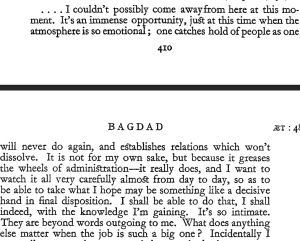
Gertrude Bell demonstrated self-awareness in her role as an agent and as an instrument of empire. She wanted to play a useful role and, in her letters, mentions several times that when she feels she is busy and productive, she is happier, but when there is a lack of work to be done or her duties are minimized, she falls into frustration and sadness. She seems to find purpose in being part of a grand scheme, in her words, “It’s so nice to be a spoke in the wheel, one that helps to turn, not one that hinders.” What does it mean to romanticize one’s own work, especially when that work is being an intelligence officer for the British Empire? This ties too to Bell’s tendency to romanticize the local people and their culture, and the archaeology and history of the region.

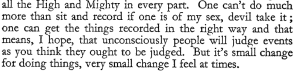
Bell emphasizes interpersonal networks, human intelligence, and building relationships, all of which are concrete ways to create and maintain imperial control, but she projects a sense of romantic adventure onto them. She frames herself not as an imperial oppressor, but as one who studies and interacts with local cultures to build relationships and foster positive developments for them. Was this how she justified her work internally? Does this affect the ethics of how her work played out, and how she was perceived by both sides (the local people and the British Empire)? Her relationship with the local people in some ways was ethical, and in other ways served imperial designs – the duality of Bell’s work is important to understanding her, because she did display a genuine appreciate and care for local people and heritage, but it does not negate the influence and the consequences of her role as an agent of the British Empire.

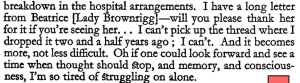
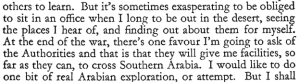
Bell’s work was also beset by a frustration over gendered constraints, and her own personal restlessness. She felt simultaneously thrilled by her work and trapped by limits imposed on her. She did not want to “sit and record”, she yearned to explore and be active – demonstrating the tension between her ambitions and the patriarchal, restrictive environment she grew up in and worked for. Through her letters, frequent references to minutia like the temperature, clothing, and accommodations all reveal her mounting agitation and a sense of containment, which she sought to escape. Her work also takes a toll on her personal life. She mentions loneliness and the difficulty in reconnecting with an old friend. Bell seeks to remain stoic, especially externally, and blames herself whenever this image falters. She sets high standards on herself, even to her own detriment. Her service of empire comes too at a high personal cost.

In closing, we might consider Bell’s fascination with the Near East. She was drawn to its ancient history and to its extant cultural traditions – yet paradoxically, in The Desert and the Sown, describes “the Oriental” (the Arab) as like an “overgrown child”. Does Bell fully buy into the imperialist British mindset of bringing civilization to the local people? She is fascinated with ancient Mesopotamia, while her daily work constructs a new, modern nation-state, designed to serve the British Empire’s regional interests. Her affection towards this land is inextricable from her own participation in destroying its capacity for independence. Her work as an archaeologist and in setting up a museum to maintain artifacts, as well as her insistence that the majority of them remain in Iraq rather than be sent abroad, show that she did genuinely value the cultural heritage of local people, and wanted them to maintain a degree of agency over their own relics. Today, in archaeology and in museology, provenance and cultural heritage are crucial factors. It is important to integrate respect both for the ancient aspects of a region and the modern people that this cultural heritage belongs to.

The following two quotes show the paradox of Gertrude Bell – on the one hand, as someone who appreciated the human connection she found with the local people, and on the other hand, as someone who proudly served the British Empire, and sought to further its dominion over the land and people of Iraq.

“But it’s a wonderful thing to feel this affection and confidence of a whole people around you.”

“…whatever our future policy is to be we cannot now leave the country in the state of chaos which we have created, no one can master it if we can’t.”

Letter excerpts from The Letters of Gertrude Bell Vol. 1 and Vol. 2.


Fanon + A More Feminine Form of Power

After reading Prof. Fawzia’s article about R.F. Kuang’s novel Babel, I started reading The Wretched of the Earth, Franz Fanon’s key decolonial text. I haven’t made it through the entire book yet, but one key idea from Jean-Paul Sartre’s preface is that men are made when they “[thrust] out the settler through force of arms” and decolonize themselves (Fanon 18).  The decolonized, realized man forms himself by throwing back at the colonizer who “no longer clearly remembers that he was once a man; he takes himself for a horsewhip or a gun” his own violence (Fanon 14). “The rebel’s weapon is the proof of his humanity,” and his violence is a direct response to colonial violence imposed on him (Fanon 19). 

Colonization, then, makes non-humans out of both the aggressor and the colonized. I found myself curious about how Fanon’s theory fit into Bell’s experience and action, especially because her work was mostly nonviolent—at least, not overtly so, and especially not from Wallach’s perspective, who provided most of our biographical information on Bell. It may be because England was more insidious in its influence in Iraq in comparison to its unfettered brutality in India, for example; or it might be a function of Bell’s gender, since she was permitted less access to decisions that involved combat than contemporaries like Lawrence or Wilson.

Mostly, though, I was interested in the first part of what Fanon wrote (as it was recounted by Sartre); that colonialism unmakes both the colonizer and the colonized. This theory provides a possible explanation for Bell and even Eberhardt’s ability to “unsex” themselves in the East and take on more male social roles, as with Bell’s negotiations among sheikhs and independent travel, and Eberhardt’s independence and sexual exploits. Fanon’s “unmaking” of colonizing men could be reframed as a movement so far to the masculine end of an imagined masculine-feminine spectrum, such that men become more like pure instruments of violence. Could it be possible that women colonizers are “unmade” differently from the male, in that they are pushed into traditional masculinity instead of total brutality? I was reminded in this train of thought of someone’s comment from class about how colonizers conquered land in an eerily similar way to how men “conquer” female bodies, as well as the references in Wallach’s biography to Bell’s desire to “penetrate” Arabia. 

Bell’s colonialist activities in Iraq could then be conceptualized as a more feminine, but still violent, mode of conquering, something based more in exploitative social, cultural, and economic relations than in direct violence. This might contextualize the quote from A Woman in Arabia, too: “If the American and British invaders of 2003, after ousting Saddam Hussein, had read and taken to heart what Gertrude had to say on establishing peace in Iraq, there might have been far fewer of the bombings and burnings that have continued to this day” (A Woman of Arabia 17). The author would likely advocate for a more neocolonialist, soft-power approach to relations with the East—in the context of Bell, a more ‘feminine’ form of power, enabled by a combination of Orientalism, racism, and the sense of freedom colonialists derived from cultural and spatial distance from the colonial motherland. This strain would be perpetuated not by men “unmade” into pure weaponry, but by women made into effective agents of imperial power.

Not a Girl’s Girl: A Possible Explanation for Bell’s Position on Women’s Rights

Intentions and motivations aside, the readings of the past three weeks have demonstrated that Gertrude Bell is nothing short of extraordinary. From the many occupations and areas of expertise she mastered to her role in shaping today’s Middle East and even her influence on TE Lawrence, Bell engraved her own name into history. Of course, we learn from Janet Wallach’s thorough account of her that Bell’s greatness was, to some extent, to be expected. After all, she was brought up in a generationally elite and educated family (Wallach 32) and was accustomed to the presence of the great socialites and academics she would later come to work with (Wallach 30, 39). From a young age, Bell was well versed in language learning, and soon, she became one of the first women to not only attend, but excel at Oxford (). However, what was not expected is her positionality as a woman posing so little hindrance to her climb up the British bureaucracy. While she did face some hurdles, from having to sit backwards in class (Wallach 48) to facing the demeaning comments and dismissals of Leachman and other colleagues on multiple occasions (Wallach 267) and even having to fight for an official position within the British intelligence order (Wallach Ch 17), Bell’s sheer expertise on the Middle East meant that once she broke these initial barriers, her climb to the top was smooth. So much so in fact, that Winston Churchill himself would come to rely on her knowledge ()! 

And for good reason. Bell’s writings, from Persian Pictures to letters in which she extensively describes the peoples and geographies of Syria, Baghdad, and even areas of Europe, are clear evidence of her eye for detail and her unique aptitude for information gathering. In fact, Bell ends up producing detailed maps of what was Mesopotamia, maps which detailed tribal affiliations and public opinion of the British, that would become crucial in her later delineation of modern day Iraq (). 

However, and this, I suppose, is what I have written my post to highlight, Bell’s consistent entitlement, whether earned like her positions and knowledge, or inherited like her wealth, meant that she had little sympathy for the struggle of other women, particularly when it came to political involvement. In other words, there is argument to be made that Bell’s scarcity of struggle in coming to power, and the amount of power she held, were the reason she said things like “”(), and was not a supporter of women’s suffrage or a respecter of more conservative women’s practices ()(). This is such an odd positionality. Unlike Eberheardt, Bell did not want to or pretend to be a man. In fact, she embraced her femininity, dressing in luxurious gowns and sophisticated hats (). Yet…Bell was not accepting of the beliefs and needs of other women, she was satisfied by simply being the woman who broke into a men’s world. 

Despite this,we still see, like in the short videos and documentary clips we watched in class, many women praise Bell as a latent feminist, one who advanced the positionality of women through her actions and the achievements she showed were possible. Achievements which would earn her titles like Desert Queen and Maker of Kings…and, I suppose, that she was.

To Craft or Un-Craft: A Response to Western Depictions of the Eastern World

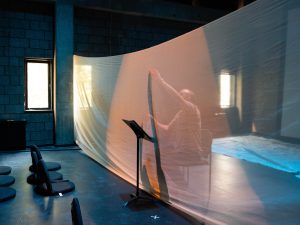
Image of Fargo Nssim Tbakhi, The Book of Dust

After our exhaustive discussion of Herzog’s Queen of the Desert, I found myself floundering to imagine the narrative landscape of its antidote. A film rife with sentimental orientalisms of the Berlin variety is of course a dime a dozen, but when attempting to deconstruct and reform it, we still found ourselves stymied when contemplating interformal revisions in any order. For example, the choice to use Arabic when historically accurate, then provoked the question of a “revised” Queen of the Desert would require subtitles. From that, the question of who and what subtitles are comes into play, dominating and redominating our psyches with the realization that Craft — particularly one that is as ubiquitously Western as filmmaking — delineates an array of theoretical “choices” who, outside their nominative delineation, differ not at all. The choice to subtitle presents just as much possibility as the choice not to subtitle for a colonial dominion over the narrative form — it is this impossibility which guided me to (what I believe is) the conceit of our in-class discussions: whether or not Craft is an impossibility as a revolutionary mechanism. 

Fargo Nssim Tbakhi’s 2023 “Notes on Craft: Writing in the Hour of Genocide” defines Craft as “the network of sanitizing influences exerted on writing in the English language: the influences of neoliberalism, of complicit institutions, and of the linguistic priorities of the state and of empire.” To Tbakhi, Craft exists to deny a nuanced reckoning with colonial mechanisms writ large. As an example, he points to Solmaz Sharif’s comments on a poem in which she erased a liberal protestor’s abetting of a staunch Republican’s anti-immigrant rhetoric in favor of highlighting only the absurdity of the former’s demands. This too is a Craft decision: the lucidity of a “good” poem implicitly requires a simplicity of forms and understanding. In this process, similarly complicit forces — such as establishment liberalism — are often ignored in favor of highlighting artistic spectacle as a function of craft. Thus, to exist in a necessary, constant state of revolt, like Palestinians have for the past 75 or so years, requires “that we poison and betray Craft at all turns.” While the conceit of Tbakhi’s argument is situated within the Intifada (for good reason), such required betrayals of Craft can be found all throughout the postcolonial world, from Kashmiri paper-maiche to Guyanaese music, in service of creating an anticolonial world order. 

Two paragraphs into this blog post, you may be asking: “But Ayanna, how does this relate to the image you have chosen, and how does that image illustrate our unit’s readings?” In response, I’d like to first contextualize the image, which is from Fargo Nssim Tbakhi’s performance of The Book of Dust. While Queen of the Desert is a film, and The Book of Dust is a theatrical production, both are interformally entangled. In both, considerations of staging, casting, translation, and overall construction must be made — and that making must be undertaken in the context of colonialism. Queen of Desert, via both its subscription to Aristotelian narrative structures and orientalized aesthetic framing of the Near East, becomes a colonial tool. Rather than serving to rupture caricatures of the Middle East, instead it deepens them. And while it can be argued that many traditions within the film do exist, these arguments ignore what the film does with these traditions. Rather than theater, where spontaneous reality is often confronted by physical or imaginary constraint, film is a medium of curation. Thus, it matters not that these races do exist, but how Herzog crafts them. Here, the camel races create a background of an Othered world as Bell familiarly converses with the future kings, physically distancing the viewer from what is unfamiliar and consequently imbuing Bell — who seems completely at ease — with a messianic quality. We must understand that these camel races are not included for cultural posterity. Instead, they exist in the tradition of the traditions of the colonized world being made canon fodder for the narratives of colonizers. 

The image I have chosen of Tbakhi stands in complete opposition to this. It subscribes to nothing of sort, instead navigating the theatrical realm with a dogmatic rejection of Craft. For instance, objects are normally fetishized in reproductions of the Oriental East (eg. the veil) are subverted in the physical theatrical space. In, The Book of Dust, rather than a barrier separating an “Oriental object” from the audience, the veil becomes a physical barrier between act and audience themselves. Consequently, the Craft practices of costuming are denied dominion over “othering” cultural garb. In a similar rejection of visual and narrative Craft, the image’s visual narrative ascends upward rather than moving from a decided end-to-beginning. Within this image, Tbakhi does not cede ground to Craft, and consequently avoids the pitfalls our revisions to Herzog’s Queen of the Desert found inevitable. In short, I find that the question born out of Tuesday’s discussion readings/viewings/discussions was: “How do you revise presentations of the Middle East after they have so long been steeped in coloniality?” This image, then, illustrates the answer.

A Bitter Lens

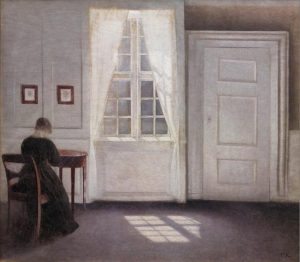
Interior from Strandgade with Sunlight on the Floor
By Vilhelm Hammershoi

Throughout the unit, I noticed a lot how Gertrude Bell had moments of seasonal depression as well as just regular depression. Specifically, in The Letters of Gertrude Bell Volume 1, she exhibited a great amount of seasonal depression while working in Basrah. The transition from being satisfied with her work in December to experiencing physical hardship, illness, strain, and depression in January is reminiscent of this painting and how the woman in it seems sad and reserved. The light in the painting fills the room but it somehow does not warm it which is similar to how the cold feels. Furthermore, when Bell talks about her feeling “limited” by her gender, it feels like how the woman in the painting is alone, cornered, and also “limited” in the way by the artist. I also imagine that the girl in the painting is writing and persevering, similar to how Bell had a sort of quiet endurance despite the inner fatigue she kept feeling when she worked.

Beyond her seasonal depression, Bell deeply mourns the loss of her lover Henry Cadogan. After his death, all her writing is filtered through a lens of grief. If you do a side by side comparison of The Letters of Gertrude Bell with Persian Pictures, you can see that her outlook of the beautiful regions she is visiting is much more grim. Like, in Persian Pictures, she says “Sunshine – sunshine! tedious, changeless, monotonous! Not that discreet English sunshine which varies its charm with clouds… here the sun has long ceased trying to please so venerable a world.” Bell is starting to hate the weather and environment she is in. Although she expresses similar distaste for the weather in the Letters of Gertrude Bell, it is not all encompassing. Just like the woman in the painting, Bell feels colder.

The Violence of Grammar: A Tool of Power

One idea that’s been stuck with me since our discussion on the “a” vs. “the” in the Balfour Declaration is how language can decide the fate of an entire people. When Gertrude Bell argued for the use of “a national home” rather than “the national home” for the Jewish people, it might have sounded like a technical adjustment, but to me, it felt like a warning. That “a” became a way to avoid responsibility, to promise without actually promising, to escape accountability. 

As a Palestinian, I have seen this same strategy used before. For example, in the Oslo Accords, the language used to describe Palestinian lands referred to them as “a territory” rather than “the territory which was a choice that allowed Israel to expand settlements and claim land that was never clearly defined as ours in the first place. The ambiguity wasn’t accidental; it was strategic. This showed me that grammar can be violent. A simple “a” can erase and dispossess just as much as bullets or bulldozers.

the use of “a” as a tool of strategic vagueness can be looked at in the broader sense such as in the U.S. Constitution. The way amendments are worded, especially those supposedly guaranteeing “equal protection” or “freedom”, have been deliberately open-ended and therefore leaves space for those in power to interpret justice however they want. Vagueness here is used as a kind of shield: it allows the state to claim moral authority while maintaining the ability to exclude and discriminate. 

I’ve always known that language is never neutral. The smallest choices in phrasing can determine whose lives are protected and whose aren’t. We (the oppressed) tend to celebrate treaties, declarations, and laws as “wins” the moment they’re signed, and it makes sense. These moments usually come after long periods of pain, loss, and struggle, so we cling to any sign of recognition or progress. I would never blame anyone for holding onto hope. But history shows that the real danger lies in the fine print like the indefinite articles, the open-ended clauses, and the carefully chosen ambiguity that gives room to manipulate. We need to look closely at what exactly we’re being offered, and what is being withheld in the wording itself. Because sometimes what looks like a step forward quietly includes the loopholes that will be used against us later.

Fantasy of Fantasy: A Comparison of Language in Queen of the Desert and Dune

In class, I briefly made a point about the use of language in Queen of the Desert (in which most of the dialogue is in English, with only certain buzzwords, names, and greetings in Arabic or relevant Middle Eastern languages) and the use of Arabic in made-up languages in fantastical films based off the Middle East, such as Dune. Where does one draw the line between accessibility, exoticization, and authenticity? When Herzog’s Iran is as much a fantasy as Director Villeneuve’s Arrakis, what lends one white-made artistic vision credibility and the other condemnation?

After a bit of sleuthing, I found a New Yorker article, ‘“Dune” and the Delicate Art of Making Fictional Languages’ (https://www.newyorker.com/culture/cultural-comment/dune-and-the-delicate-art-of-making-fictional-languages?_sp=7e36c459-8134-41bc-9eee-8d6d99565401.1760207334616), which ruminates adjacently on this topic. In Dune, Arabic is the “language of greatest influence…[where the fantasy language] uses at least eighty terms with clear Arabic origins, many of them tied to Islam.” Amongst these words are, most notably, istislah (“natural law”), ijaz (“prophecy”), and names, such as shai-hulud (“thing of eternity”) and mu’addib (teacher). Strikingly, the word jihad, while present in the books, is excluded purposefully in the films, as not to perpetuate modern negative associations. The reasoning for these inclusions is unique; of course, the filmmakers thought it apt to pay tribute to the Middle East, but they also reason that Dune takes place so far in the future the language must have evolved beyond recognition, just as how English has evolved dramatically since Beowolf. There are some other stand-out lines from the article; particularly, when addressing the white-washing of certain characters, scholar Khaldoun Kheli states that “Arabs can’t be heroes…we must be erased.”

These two films hold an interesting dichotomy; Queen of the Desert is a fantasy of a Middle Eastern past, while Dune is essentially a fantasy of a Middle Eastern future. With a shared inspiration, the similarities and differences are fascinating. Both films deal with the colonization of the Middle East (perhaps subconsciously suggesting, though this may be a bit of a long shot, that a place only becomes accessible and relevant after a white man has stepped into it). Herzog’s film seems obviously fetishistic, while Villeneuve executes with more taste and tact. Both films suffer from White Hero Syndrome: Timothee Chalamet plays the world’s legendary prophet Lisan al-Gaib, and Gertrude Bell is bestowed the title of Umm al-Mu’minin (wife of the prophet) by King Faisal (how interesting that these are both Islamic epithets of the highest honor, which the narrative and history has bestowed upon white characters). 

This projects onto a greater point of Orientalism, which characterizes the East as essentially a colonial fantasy. There is quite a depressing argument to be made here, which is that in the past, present, and future, the Middle East is imprisoned within the exaggerated imaginations of white creators. However, that may be too reductionist of a generalization to make in such short a post, as camel races did exist, Gertrude Bell was in fact named Umm al-Mu’minin, and the argument about Beowulf does make quite a lot of sense. Rather, the key definer seems to be about framing, rather than content. However, I am  unfortunately running out of space — hopefully a commentator can take it from here.