The world “expatriate” is defined by Merriam-Webster as:
expatriate (verb):
1. banish, exile
2. to withdraw (oneself) from residence in or allegiance to one’s native country
3. to leave one’s native country to live elsewhere
also: to renounce allegiance to one’s native country
expatriate (adjective): living in a foreign land
expatriate (noun): a person who lives in a foreign country
The idea of expatriates (“expats”) in the contemporary era is one of digital nomads, international businessmen, and passport bros. To be an expatriate is more serious than vacation – to be an expatriate is to choose to be away from home, for a very prolonged, even permanent amount of time, and to refute your home nation for various personal reasons in favor of the foreign.
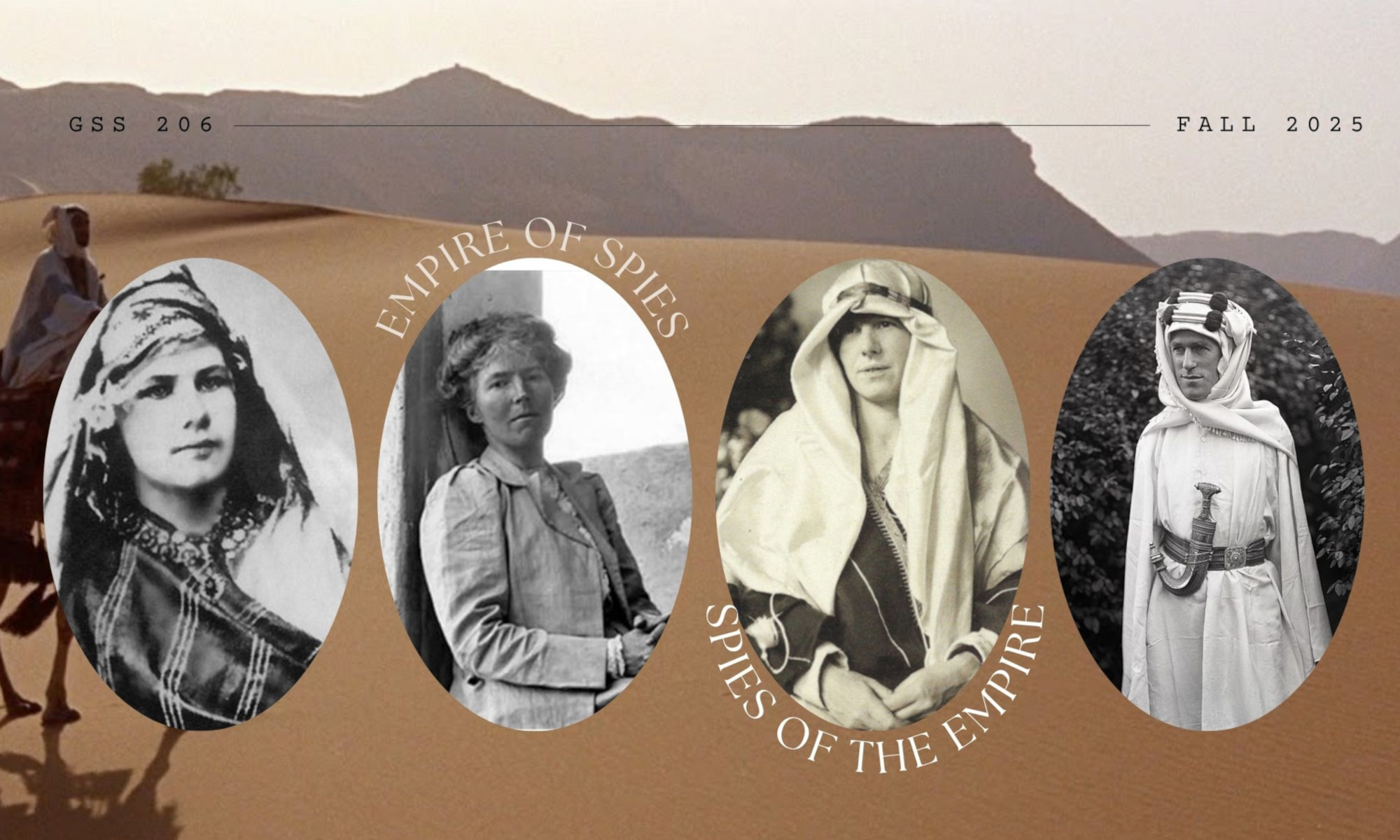
When studying Isabelle Eberhardt’s life, I considered what I shared with the travelers, writers, archaeologists, and adventurers of the 19th to early 20th century who felt this sense of the expatriate mindset, the Germanic sense of “Fernweh” – a severe desire to wander, travel, and be distanced from their homeland. I found it sad in Eberhardt’s life that she was raised in a difficult, abnormal home, could not reconcile herself with Geneva or Europe in general, and attempted to seek peace in Morocco and Algeria, to the great detriment of her physical health and ultimately her life. In the introduction to Writings from the Sand, Vol. 1, the editors Marie-Odile Delacour and Jean-René Huleu write that she left Geneva “in hopes of never returning” (Eberhardt, 2012).
My parents are both mentally unwell and I also had a difficult, abnormal upbringing. It caused me to associate my geographic constraints with intense negativity. As a child, I fantasized about moving abroad. Later, in the military, I requested an overseas duty station and was out of the United States for four years.
The internet is currently rife with a shared sentiment among many Americans (and those of other nationalities, too), who desire to voluntarily leave their homeland for somewhere else on the grounds of political instability, lack of belonging, safety, better opportunities, and myriad other reasons. My friends echo these desires, with some having successfully relocated abroad, and others unable to do so.
A line that has always stuck with me is from the film, The English Patient: “We are the real countries. Not boundaries drawn on maps with the names of powerful men. I know you’ll come carry me out to the Palace of Winds. That’s what I’ve wanted: to walk in such a place with you. With friends, on an earth without maps.” (Minghella, 1996). Despite collective urges to travel, whether temporarily or permanently, to pursue the foreign, to imagine that it is perhaps better than what is at home (even if this is a falsehood or merely a half-truth – no place is perfect, and exoticizing another nation does not make it a solution to one’s domestic problems) – in the end, nation-states and logistics rule over us. They rule over the expatriate and therefore shape the expatriate mindset itself. Eberhardt contended with such difficulties in her travels, including with finances, physical hardship, and the need to straddle the fine line between appeasing the French occupying force and building friendship with the Arab peoples she so strongly identified with.
The English Patient imagines a hypothetical “earth without maps” with true freedom. However, nation-states cannot exist without borders. What would a border-less world, a dream for a self-described vagabond like Eberhardt look like? How would it function, and would such a mode of existence even be remotely feasible, or does it go against human nature? Would a border-less world serve to answer the anxieties of this generation’s expatriates?
References
Merriam-Webster. (n.d.). Expatriate. In Merriam-Webster.com dictionary. Retrieved September 21, 2025, from https://www.merriam-webster.com/dictionary/expatriate
Minghella, A. (1996). The English Patient: A Screenplay. http://ci.nii.ac.jp/ncid/BA34785462
Eberhardt, I. (2012). Writings from the Sand, Volume 1: Collected Works of Isabelle Eberhardt. U of Nebraska Press.
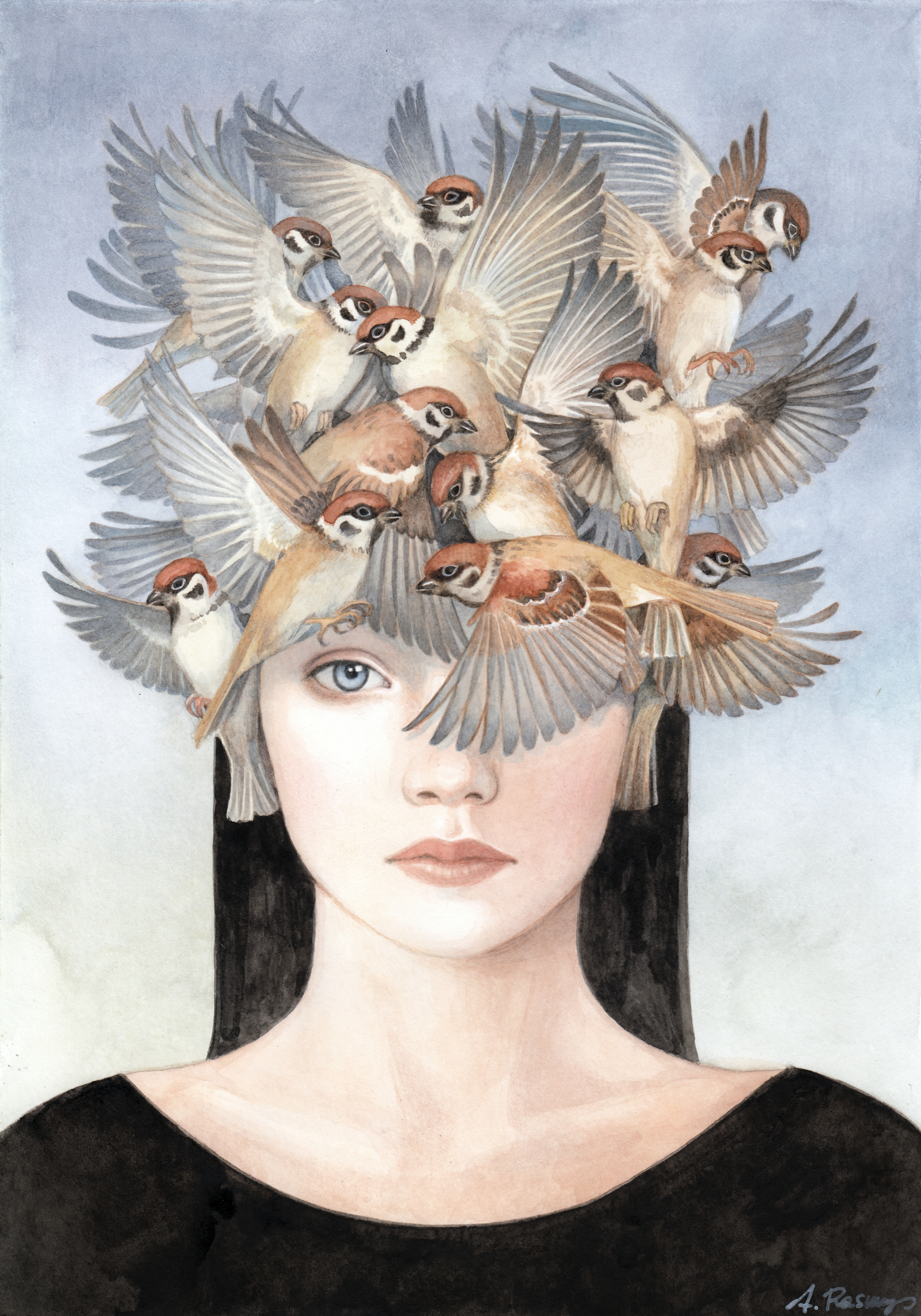 Nostalgia for Freedom I by Angelika Rasmus