Hi everyone!
This was my final project/lecture that Prof. Fawzia asked to be posted on the course blog!
Hope you all have a good look at it 🙂
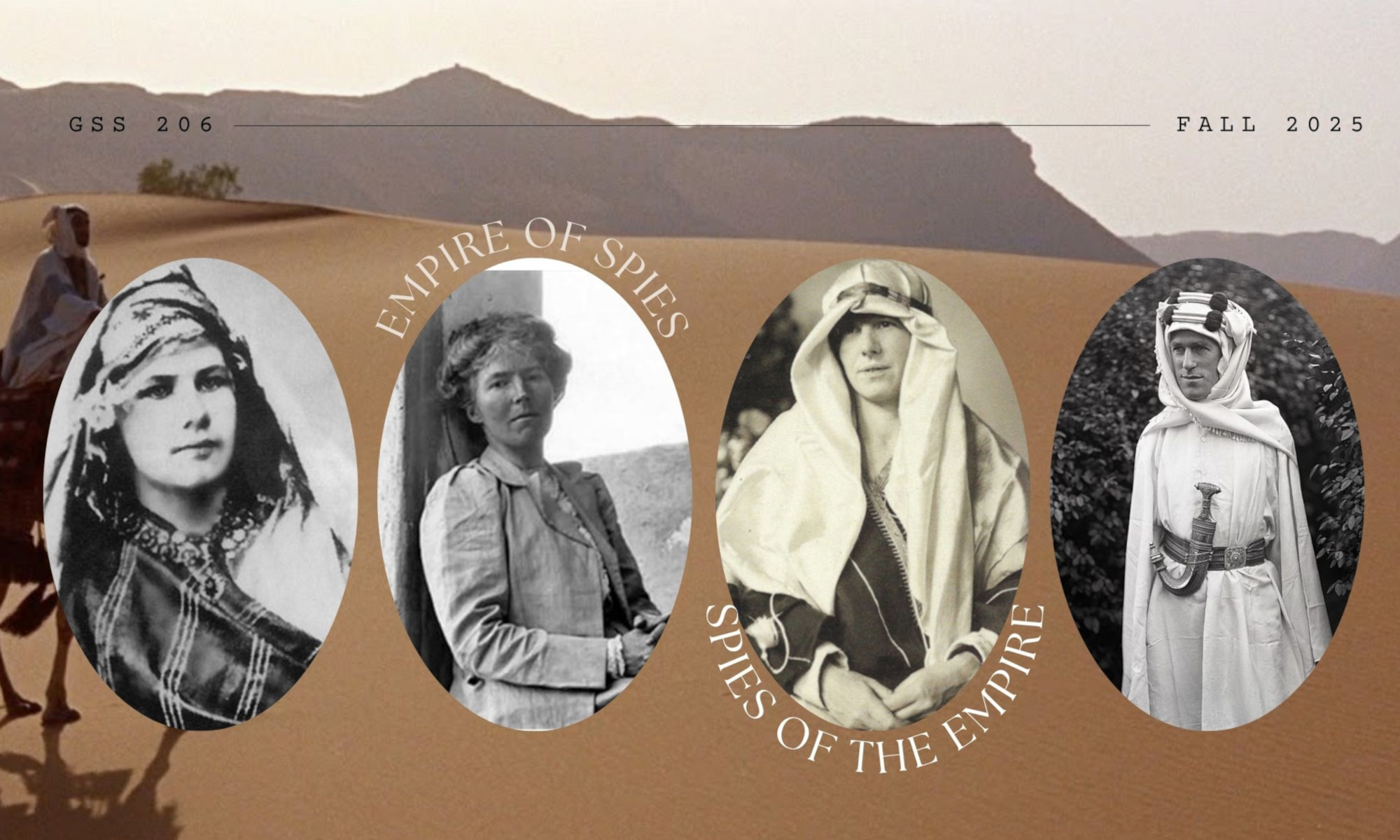
Spies of Empire/Empire of Spies
GSS206-NES204-THR214, Fall 2025
Hi everyone!
This was my final project/lecture that Prof. Fawzia asked to be posted on the course blog!
Hope you all have a good look at it 🙂
If I could assign this unit’s readings to anyone, I would assign them to my girlfriend Nikola. Her curiosity about Lawrence in Lahore sparked an interest in understanding the real T.E. Lawrence, but most portrayals present him as a mythologized hero of the British Empire. Our unit’s readings complicate that heroic image and provide a fuller sense of Lawrence as a complex, at times contradictory, figure.
A central text to begin with would be Seven Pillars of Wisdom, which reveals Lawrence’s contemplative voice and the internal contradictions he carefully constructs and performs. Pairing that with Raili Marling’s “Masculinity in the Margins” would show how Lawrence struggled to fully embody the masculine, heteronormative ideals of his era. Together, these readings would sharpen her understanding of the tension dramatized in Lawrence in Lahore, especially the gap between the public-facing, confident Lawrence and the private Lawrence, whose letters (including The Gay Love Letters of Lawrence of Arabia) describe shame, self-punishment, and discomfort with the heroic narrative imposed on him.
More broadly, reading about Lawrence, an accomplished figure, might make her feel empowered to leave her comfort zone and embark on “adventure”, as Lawrence himself did, and as a queer person, she would appreciate seeing how his time viewed homosexuality – a way of understanding the emotional cost of navigating queer identity within rigid imperial structures. Further, understanding empire from a different perspective (the British Empire, and its interactions with the Middle East), would provide insight on why this region remains unstable today, and a perspective outside of the typical Eurocentric narrative.
By studying Lawrence’s writings alongside biographies and media which re-interpret him, it becomes clear how imperial icons are constructed, edited, and continually developed for new audiences. Nikola often asks me how people “can be so stupid” as to fall for political cults of personality, and the Lawrence myth offers a concrete example of this process. His myth was manufactured and commodified during his lifetime by figures like Lowell Thomas, then posthumously spun by later biographers and filmmakers, who each built their own portrait of Lawrence to suit various political and cultural ends. Overall, I think that the Lawrence readings would be a compelling experience for her, and help her investigate questions about contemporary media and politicizing – and especially, how narratives are twisted and changed long after their creators are gone.
As I read Seven Pillars, a few sentences stood out because they exposed the contradictions and self-shaping that Lawrence leans on throughout the book. One of the clearest examples is his early admission that this is a “self-focused narrative…unfair” to the soldiers and even to his British colleagues. On the surface it sounds humble, almost like he’s trying to be transparent, but I think it was more like a pre-emptive shield. By naming his bias up front, he gives himself permission to center his own experience anyway. And honestly, that annoyed me. It’s like he wants to claim subjectivity when it suits him, but still make his perspective the emotional and intellectual anchor of the entire revolt. He gets to frame the story while acting like he’s too self-aware to be blamed for it.
In Chapter I, when he says the campaign stripped fighters of “ordinary morality, pity, and a sense of individual responsibility,” I noticed how quickly the revolt became a stage for his inner psychological drama. The way he talks about moral decay and alienation overshadows everything else. He’s choosing which emotions to foreground, and they almost always circle back to him. Instead of exploring the broader ethical or political meaning of what’s happening, he turns the whole desert into a metaphor for his own unraveling. The chapter ends up feeling less like a collective wartime experience and more like Lawrence working through an existential crisis. How much of this “suffering” is something everyone felt? How much is part of the persona he’s building: half heroic, half damaged philosopher-soldier?
Then in Chapter II, when he defines “the Arabs” mostly through language and shared social structures. He’s drawing a giant map, dividing people into neat categories, and presenting all of it like it’s objective fact. His descriptions sound academic, but they flatten real differences and turn whole populations into abstractions. This reminded me how quickly ethnographic writing, especially by someone who already sees himself as a cultural interpreter can slip into essentialism without ever admitting that’s what’s happening.
Basically, all of this made me way more aware of how Lawrence sets himself up as the voice we’re supposed to trust. He admits things, sure, but then he turns around and uses that to frame everything on his terms.
Honestly, the more I read Freya Stark and watched the films about her, the more uneasy I felt. She’s clearly brilliant and bold (there’s no denying that) but something about her voice never sits right with me. She notices everything, but it’s like she never actually feels what she’s seeing. There’s a constant distance, as if she wants to understand the world, but only on her own terms, only while she’s still the one holding the map.
So I made this playlist to respond to what she couldn’t say, what she couldn’t feel.
1) Marcel Khalife – “Ummi (My Mother)”
(Linked to: Letters from Syria and Beyond Euphrates)
In Letters from Syria and Beyond Euphrates, Stark walks through Damascus and Baghdad describing every detail: the graveyards, the veils, the “three separate quarters.” She’s observant to the point of precision, but she never really steps inside what she’s seeing. When I listen to Khalife’s “Ummi (My Mother),” that distance completely disappears. His voice feels like warmth, like home. When he sings, “I long for my mother’s bread, my mother’s coffee,” it’s belonging. Khalife makes what Stark calls “the Orient” feel human again. He sings from within what she only describes. Reading her after hearing him, I realized how often she confuses curiosity for connection.
2) Ahmad Kaabour – “Ounadikum (I Call to You)”
(Linked to: Passionate Nomad, Chapter 19)
There’s one line from Passionate Nomad that stuck with me: “It hardly made sense to make the Palestinians pay with their homes and lands for injuries done to Jews by European Christians.” She’s right, but she says it like an observer writing a report, not someone grieving a people’s loss. Ahmad Kaabour’s “Ounadikum” is the exact opposite of that. When he sings, “I call to you, my people,” it’s urgent, not detached. His voice makes her writing feel distant, like moral language without emotion. Stark’s “they” never becomes “we,” and that’s the difference.
3) Fairuz – “Zahrat al-Madā’in (The Flower of the Cities)”
(Linked to: Passionate Nomad and her 1944 press comments)
When Stark writes about Jerusalem, she does it with a kind of calm that’s almost cold. She calls it “friction between Jews and Arabs,” as if she’s describing weather. Fairuz’s “Zahrat al-Madā’in” destroys that calm completely. When she sings, “Jerusalem, flower of cities,” it’s both a prayer and a cry. You can feel the heartbreak in every word. She aches, grieves, and feels (unlike Stark who seems to only be analyzing).
4) Tracy Chapman – “Talkin’ ’Bout a Revolution”
(Linked to: Freya Stark’s 1944 press tour comments)
During her 1944 press tour, Stark calls the Arabs “the rightful owners of Palestine,” which sounds bold until you realize she’s still speaking as part of the British machine that made the whole crisis possible. She names the problem but never challenges the power behind it. Tracy Chapman’s “Talkin’ ’Bout a Revolution” is like that silence finally breaking open. Chapman doesn’t stop at moral awareness; she pushes toward change. Her song says what I wish Stark had the courage to: not just this is wrong, but this must end.
5) Le Trio Joubran – “Masār”
(Linked to: Towards the Unknown Land – Nepal)
In Stark’s final film, she’s carried through the mountains of Nepal by a team of porters. She looks fragile but composed, smiling faintly as she says, “If it fails, it fails.” The moment is framed as graceful acceptance: an aging traveler facing limits with humility. However, to me, it felt like comfort disguised as wisdom. Even at the end of her life, she’s still being carried (literally) by others whose presence is unnamed. Le Trio Joubran’s “Masār” sounds like that scene. It’s beautiful, but it refuses peace. It feels like remembering something you can’t fix. When I listen to it, I imagine it filling the silence in Stark’s film: not judging her, but not forgiving her either. Just holding her quietness up to the light and asking what’s underneath it. It made me think about how reflection isn’t the same as reckoning. Stark reflects endlessly (on landscapes, people, herself) but her reflections never really cost her anything. Masār feels like what real reckoning would sound like: the moment when beauty stops protecting you, and you finally have to sit with what you’ve done.
Freya Stark has been the (if not one of) most intellectually stimulating, accomplished, and devoted spies that we have encountered thus far in our seminar. This playlist will be curating some songs that echo this moral and emotional landscape of Freya Stark’s writings and discussions we’ve had over the last 3 weeks, especially towards her ambivalent stance between devotion and exile as well as humility and power. These songs will be reflecting her own cross-cultural sympathies and her layered identity. I think Freya Stark is a really interesting individual, her loyalties will ultimately is always towards Great Britain, but her complexities in how she sees the Arab World and her seeing faith as beauty in everyday life rather than a dogma makes me view her with a more ethical and reliable lens (although we do have our critiques). Her ability to craft her own story through her own choosing and focusing on her travels makes her a great person to analyze.
“Aaj Jane Ki Zid Na Karo” – Farida Khanum (1960s, poet was Fayyaz Hashmi)
This ghazal’s entreaty “Don’t insist on leaving today” encapsulates the sorrow of transience that permeates Letters from Syria and Perseus in the Wind. In our class discussions, we explored how Stark’s existence fluctuates between belonging and departure, between service and solitude. Khanum’s voice embodies that same duality: restraint, longing, and quiet dignity. Similar to Stark’s prose, it avoids sentimentality while brimming with emotion. The song’s languorous rhythm reflects Stark’s evenings in Damascus or Baghdad, moments caught between closeness and distance, faith and exile. It transforms into an anthem for her moral restlessness: desiring to remain, yet aware that she must perpetually move forward.
“El Helwa Di” – Sayed Darwish
The class emphasized Stark’s admiration for “ordinary service”, her belief that empire fails when it strips people of dignity or agency. Darwish’s song about Cairo’s morning workers gives life to that idea. “Empire redeemed through care.” In Baghdad Sketches, Stark likewise finds holiness in ordinary acts: women baking bread, men sweeping courtyards at dawn. The song reflects her conviction that service ennobles the human spirit and that true civilization is measured not by empire, but by small kindnesses. The song’s gentle strings embodies the grace present within empire as seen through Stark’s eyes, strength for the Arab world lies in its humanity and hospitality not its politics the way the British does. However, Stark still uses moral language to critique empire from within. In Passionate Nomad, Geniesse captures this tension: Stark defends Britain’s Arab policy while privately empathizing with Arabs betrayed by the post-WWI settlement.
“Desert Rose” – Sting ft. Cheb Mami
Cheb and Sting’s English and Arab duet creates the same cultural duality as seen through Letters from Syria. This song represent the constant back and forth with the East and the West, reasoning and reverence. Stark is noted to be “morally exiled”, too Western to belong to the East and too “Eastern”/changed in her perspectives to return and be content at home. This song is the exile to everything she is, perfectly framing Stark as sensual, distant, yearning, yet still patriotic. Stark once wrote, “The desert does not separate; it teaches us the beauty of distance.” Stark’s fascination with Arab “service” and her writings that accustomed affectionate realism rather than Orientalist distance, however she still had her 1930s British views as seeing British’s roles as a moral tutor of the Arabs.
“Riverside” – Agnes Obel
Reflective, quiet, sorrowful, mirroring the tone of Perseus in the Wind where Stark is contemplating beauty, life, aging, and faith. Solitude of travel, the river representing her travels and what she’s saying. Obel sings how she “sees how everything is torn in the river deep. And I don’t know why I go the way down by the riverside..” analogous to Stark and her travel writings and her “feminine ethics of observation”. “The world’s beauty,” Stark wrote, “is the highest service a soul can render.” “Riverside” sounds like the stillness of that service. Stark’s gender and her perspective is very much seeing feminine virtues redeeming imperial contact and this process of her continuing to embody empathy and service through her stops and in conjunction with this song, the analogy of her travels to being along the river.
“Arrival of the Birds” – London Metropolitan Orchestra
While this song is purely instrumental, it is fitting for it to be regarded as Freya Stark’s ultimate life theme song. Stark’s numerous writings can be regarded as the lyrics as her writings have been grand, full of rich text to be deciphered, ultimately mimicking the feeling of returning home changed. The tone of the song is very grand, dignified, tapered right as it would approach arrogance. The song invokes discovery, wonder, and the quiet till of achievement. In Perseus in the Wind, she wrote that “the human spirit grows only when challenged,” and this song embodies that belief. It’s not victory by domination, but victory through understanding. This piece encapsulates her quiet ventures from her childhood struggles to her early travels to her dignified later years as Dame Freya Stark.

Edward Hopper was a painter who explored American solitude and loneliness more broadly. While Hopper depicts scenes that are rather simple, they still evoke so much emotion. They force the viewer to face emptiness head-on. In Morning Sun, a woman sits on her bed, stares out the window to the sky. But somehow, it feels lonely. Is it the emptiness of the room? Bare walls, a solo figure, a cloudless sky, a simple bloc of buildings, the look on the subject’s face? While studying Freya Stark, it seemed to me that loneliness also permeated her narrative. Stark, perhaps more than the other spies we’ve studied, makes travel seem exceedingly beautiful. Her travel writing stands on its own and would successfully cover her trail (but not dissolve ALL suspicions of her) if we did not know she was a spy. It’s both relaxing and meaningful, adventurous and eye-opening. This makes her spywork particularly captivating and sinister. Quotes like “And if our Empire melts away I think it will not be because we have lost the love of serving but because we have been denying that love to other people, so depriving them of a chance to practise virtues that could make them happy as much as they do us” (Perseus in the Wind, 15) and “It was the fashionable thing to be anti-British in Baghdad at that time” (Baghdad sketches 42) take on a new light. No longer is Stark a judgemental and hoity-toity British traveler, she is an invested patron and benefactor of empire itself. Psychoanalytically, I think much of this is rooted in her low-class (and therefore racialized) upbringing. Her life was deeply nontraditional: a confused family unit, unloving proto-feminist mother, romantically deviant father figure. All of this contributed to her desire to not only be accepted, but to belong to something, to Britain and its empirical values. She took on the identity of a foreigner, despite being British. “She spoke English with a slight foreign accent, [which] made her an immediate object of suspicion to the British authorities,” even though as she writes, “It makes me feel a kind of pariah from my own kind, and awfully disgusted… I am not even pro-native certainly as much of an imperialist as any of the people here” (Ruthven 152, 153). Imagining Hopper’s figure as Stark, in this way, feels significant to me. If the figure is read as Stark, she looks out to the horizon in a trap of loneliness, empty space behind and before her. She works towards empire because of her desire for belonging, but to what end? The room is empty, but so is the view outside the window. All that shows is one bloc of buildings, not even the ground it stands on. This takes on the significance of the consequence of empire: a building with no (or at least an uncertain) foundation. While the sun shines on the subject, the room itself is not warm-toned. It’s cool blue and cold, like a solitary hospital room, evocative of Stark’s nursing experience and her time being ill. The subject’s eyes are dark, perhaps contemplative, her mouth straight and serious. Is she lonely, sad, regretful? What does it mean to her to look away from the presumed comfort of the bed she sits on? She has no cushioning behind her back, despite there being a pillow within reach. Instead, her only comfort seems to be a self-soothing hold. Furthermore, we only see one side of the figure’s face, much like how Stark presents herself (literally and metaphorically): a seemingly innocuous figure with the incredible ability to hide what is underneath the surface. The figure is an incongruity, the only vibrant pink of the piece, yet shadow covers parts of her. Her color is diminished and she almost blends in with the wall behind her. Hopper captures, if read in the context of Freya Stark, the loneliness of empire, its shaky foundation, and the consequence to (not only its victims, but also) its perpetrators. Empire is inherently empty: a sun with no warmth, a bed with no comfort, a room where one is forced to always look ahead, but never successfully move forward.
Freya Stark’s era of power overlapped with the life and work of Walter Benjamin, the Frankfurt School writer and thinker. I was especially reminded of Benjamin when I read about Stark’s deep involvement in the production and distribution of propaganda films. In “The Work of Art in the Age of Its Technical Reproducibility,” Benjamin argues that the film medium, though it carries some latent revolutionary/democratic potential, is especially suited to fascism; it’s part of a broader transition in art away from the cult value of a unique item situated in a particular, hallowed viewing space and toward a mechanically-reproduced image, all meaning and authenticity of which is diluted with reproduction. Film is an especially severe example because politics steps up to replace its cult/religious value. It replicates the real world and adheres to genre convention too precisely, such that all the work of interpretation is already done for the viewer. Stark’s propaganda films did the same and took it even further. They explicitly demonstrated the military might of the British Empire, with the express purpose of telling the subject of the film to think, whether they realized it or not: “these people are powerful, I should ally myself with them.” Her films were pure politics, in the sense that they were a honed tool of imperial power, not in the sense that any real dialogue occurred between the film/propagandist and the subject.
Benjamin would have hated her films, even as he fled the Nazi Germany the British were helping to defeat. He would have found them artless and fascistic; the colonial mechanism isn’t as different from the fascistic one as it seems imperialists of Freya’s era would like to think. This hypothetical opinion of Benjamin’s reflects how I feel, for the most part, about Stark’s life. She was interesting, but seems to have tried to do the work of interpreting her own life for us already, as Benjamin’s film does to the audience, with her re-wrought books, letters, and autobiographies; still these texts tell us little about the person Stark actually was, so we must turn to biographers, and even they are overly sympathetic at times. She was uncreative in her life’s mission and, while she appreciated the aesthetics of revolution and the East, she never broke from the Empire’s mission.
She, too, was subject to the controlling influence of the British Empire. Although personal circumstances made her unique, in a core way, she was a person “reproduced” under Benjamin’s model—brought up Britishly, made to memorize poems and love the Empire, repeatedly copied until there could be no original/authentic version of her type, not even Gertrude Bell. All she knew was this method of mechanically reproducing ideology, so it makes perfect sense that she would bring those propaganda films with her to Yemen—she was reproducing the model she knew.
Example of the type of film she might have carried (produced by the Ministry of Information, which she worked for): “WARTIME FACTORY” 1940 WWII BRITISH INDUSTRIAL INCENTIVE PROPAGANDA FILM XD82705
Gertrude Bell demonstrated self-awareness in her role as an agent and as an instrument of empire. She wanted to play a useful role and, in her letters, mentions several times that when she feels she is busy and productive, she is happier, but when there is a lack of work to be done or her duties are minimized, she falls into frustration and sadness. She seems to find purpose in being part of a grand scheme, in her words, “It’s so nice to be a spoke in the wheel, one that helps to turn, not one that hinders.” What does it mean to romanticize one’s own work, especially when that work is being an intelligence officer for the British Empire? This ties too to Bell’s tendency to romanticize the local people and their culture, and the archaeology and history of the region.
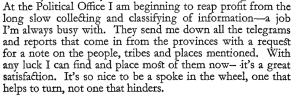
Bell emphasizes interpersonal networks, human intelligence, and building relationships, all of which are concrete ways to create and maintain imperial control, but she projects a sense of romantic adventure onto them. She frames herself not as an imperial oppressor, but as one who studies and interacts with local cultures to build relationships and foster positive developments for them. Was this how she justified her work internally? Does this affect the ethics of how her work played out, and how she was perceived by both sides (the local people and the British Empire)? Her relationship with the local people in some ways was ethical, and in other ways served imperial designs – the duality of Bell’s work is important to understanding her, because she did display a genuine appreciate and care for local people and heritage, but it does not negate the influence and the consequences of her role as an agent of the British Empire.

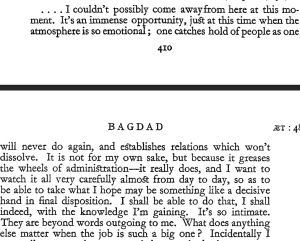
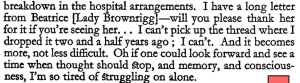
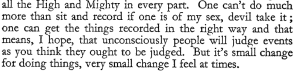
Bell’s work was also beset by a frustration over gendered constraints, and her own personal restlessness. She felt simultaneously thrilled by her work and trapped by limits imposed on her. She did not want to “sit and record”, she yearned to explore and be active – demonstrating the tension between her ambitions and the patriarchal, restrictive environment she grew up in and worked for. Through her letters, frequent references to minutia like the temperature, clothing, and accommodations all reveal her mounting agitation and a sense of containment, which she sought to escape. Her work also takes a toll on her personal life. She mentions loneliness and the difficulty in reconnecting with an old friend. Bell seeks to remain stoic, especially externally, and blames herself whenever this image falters. She sets high standards on herself, even to her own detriment. Her service of empire comes too at a high personal cost.
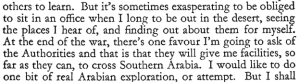
In closing, we might consider Bell’s fascination with the Near East. She was drawn to its ancient history and to its extant cultural traditions – yet paradoxically, in The Desert and the Sown, describes “the Oriental” (the Arab) as like an “overgrown child”. Does Bell fully buy into the imperialist British mindset of bringing civilization to the local people? She is fascinated with ancient Mesopotamia, while her daily work constructs a new, modern nation-state, designed to serve the British Empire’s regional interests. Her affection towards this land is inextricable from her own participation in destroying its capacity for independence. Her work as an archaeologist and in setting up a museum to maintain artifacts, as well as her insistence that the majority of them remain in Iraq rather than be sent abroad, show that she did genuinely value the cultural heritage of local people, and wanted them to maintain a degree of agency over their own relics. Today, in archaeology and in museology, provenance and cultural heritage are crucial factors. It is important to integrate respect both for the ancient aspects of a region and the modern people that this cultural heritage belongs to.
The following two quotes show the paradox of Gertrude Bell – on the one hand, as someone who appreciated the human connection she found with the local people, and on the other hand, as someone who proudly served the British Empire, and sought to further its dominion over the land and people of Iraq.
“But it’s a wonderful thing to feel this affection and confidence of a whole people around you.”
“…whatever our future policy is to be we cannot now leave the country in the state of chaos which we have created, no one can master it if we can’t.”
Letter excerpts from The Letters of Gertrude Bell Vol. 1 and Vol. 2.
One idea that’s been stuck with me since our discussion on the “a” vs. “the” in the Balfour Declaration is how language can decide the fate of an entire people. When Gertrude Bell argued for the use of “a national home” rather than “the national home” for the Jewish people, it might have sounded like a technical adjustment, but to me, it felt like a warning. That “a” became a way to avoid responsibility, to promise without actually promising, to escape accountability.
As a Palestinian, I have seen this same strategy used before. For example, in the Oslo Accords, the language used to describe Palestinian lands referred to them as “a territory” rather than “the territory” which was a choice that allowed Israel to expand settlements and claim land that was never clearly defined as ours in the first place. The ambiguity wasn’t accidental; it was strategic. This showed me that grammar can be violent. A simple “a” can erase and dispossess just as much as bullets or bulldozers.
the use of “a” as a tool of strategic vagueness can be looked at in the broader sense such as in the U.S. Constitution. The way amendments are worded, especially those supposedly guaranteeing “equal protection” or “freedom”, have been deliberately open-ended and therefore leaves space for those in power to interpret justice however they want. Vagueness here is used as a kind of shield: it allows the state to claim moral authority while maintaining the ability to exclude and discriminate.
I’ve always known that language is never neutral. The smallest choices in phrasing can determine whose lives are protected and whose aren’t. We (the oppressed) tend to celebrate treaties, declarations, and laws as “wins” the moment they’re signed, and it makes sense. These moments usually come after long periods of pain, loss, and struggle, so we cling to any sign of recognition or progress. I would never blame anyone for holding onto hope. But history shows that the real danger lies in the fine print like the indefinite articles, the open-ended clauses, and the carefully chosen ambiguity that gives room to manipulate. We need to look closely at what exactly we’re being offered, and what is being withheld in the wording itself. Because sometimes what looks like a step forward quietly includes the loopholes that will be used against us later.
Gertrude Bell is a complicated individual, as all these spies are turning out to be. I think what I found so fascinating about Bell is that despite her love for Iraq (however much was genuine, and not exoticized or orientalized), she was consistently loyal; loyal to her family and to Great Britain itself. This made reading her life as a narrative much simpler than Isabelle Eberhardt. I scoured my playlist to find (my best attempt at) the perfect mix of tragedy, beauty, the pull of discovery and power, and the split loyalties/love that define the life and spywork of Gertrude Bell.
This song feels like Bell’s love for the British Empire. It is her master, her sordid and salacious lover. While it seems like a far-off, looming entity, the Empire is something dear to Bell. However, she must leave England precisely because of her love. She projects her loyalty into her spywork, leaving the room she knows so well, but always looking back at her far away master. “It was appropriate that the Bells’ family fortune was earned through… Britain’s great strength, after all […] they worked not only to enhance their own communities but to maintain Britain’s place in the sun. They took pride in the British Empire and its role as custodian of the universe” (Wallach; “Of Great and Honored Stock”).
I interpret this song as Bell’s growing entanglement and work for the British Empire. Her job of perception is based in deception. She must deceive the Iraqi people she loves to further the aims of the country she answers to, the country she believes has the power to make the trees bend in welcome. Why does the fast train of imperialism rage on, where does it end? Where do the passengers, the colonized, wait, in the meantime? “Authority would remain in the hands of dignified Sir Percy and a group of British advisors. London was convinced that it would control Iraq until that undetermined and presumably distant day when the untutored Iraqis had learned to govern themselves” (Brian; Desert and Sown introduction).
Bell’s love for Iraq and loyalty to England is paradoxical. She follows the tide to the beautiful that she wanted so badly, with the monster of imperialism over her shoulders. She occupies a middle space, a space of no feeling, and must continue diving deeper, becoming more entangled in life in Iraq and loyalty to Britain. Ironically, her loss of power towards the end of her life also mirrors the death of the song’s treasure hunter. “The work has been so interesting that as far as I am concerned I couldn’t have experienced better or even as good, a destiny” (Bell; Letters II 658-659). “She employs her growing competence of Arabic to describe a backward country in the flux of change” (Brian; Desert and Sown introduction).
I see Bell as this song’s Big Hero. With her eventual loss of power, what is there to show? A country divided and kings made by a name no one seems to remember. Her time in Iraq was not exactly true, but it can’t be discounted because she did truly love the people she met (in her own, perhaps infantilizing, belittling way). She can only deliver love to (or perhaps exert power over) Iraq by caring for her museum. Despite all her lies and deception, she would still wish them well in some (British-controlled) way. “Seven years I’ve been at this job of setting up an Arab State. If we fail it’s little consolation to me personally that other generations may succeed, as I believe they must…” (Bell; Letters II 664).
I imagine this as Bell’s love letter to Iraq before she dies. Today, Iraq is with her and the British, but tomorrow, who knows? Iraq has become her home, it’s a place she cannot live with as is, but cannot live away from. It’s tragic and beautiful! Iraq is her true love, perhaps because it’s the place she was able to leave her mark. Souad Massi’s Algerian, but the song is in Arabic, so I think Bell would appreciate the song for its exotic Arab aesthetic. “They never elect any other European. That’s the sort of thing that makes it difficult to leave” (Bell; Letters II 667). “I love seeing [Iraqi visitors] and they are most useful for purposes of information” (Bell; Letters I 407).
Gertrude Bell did sleep off her regret in a very literal way. Whether her death was a true suicide or not, she was undoubtedly sad and lonely. I see this song as Bell’s tired goodbye to her beloved Iraq, the place she couldn’t quite keep a grasp on. “There are long moments when I feel very lonely… I am aware that I myself have much less control over my emotions than I used to have” (Bell; Letters II 658, 662). “Gertrude Bell took an overdose of sleeping pills. All of Baghdad attended her funeral, along with an honor guard of sheiks from her beloved desert” (Brian; Desert and Sown introduction).
The McGraw Center for Teaching and Learning
328 Frist Campus Center, Princeton University, Princeton, NJ 08544
PH: 609-258-2575 | FX: 609-258-1433
mcgrawdll@princeton.edu
A unit of the Office of the Dean of the College
© Copyright 2026 The Trustees of Princeton University