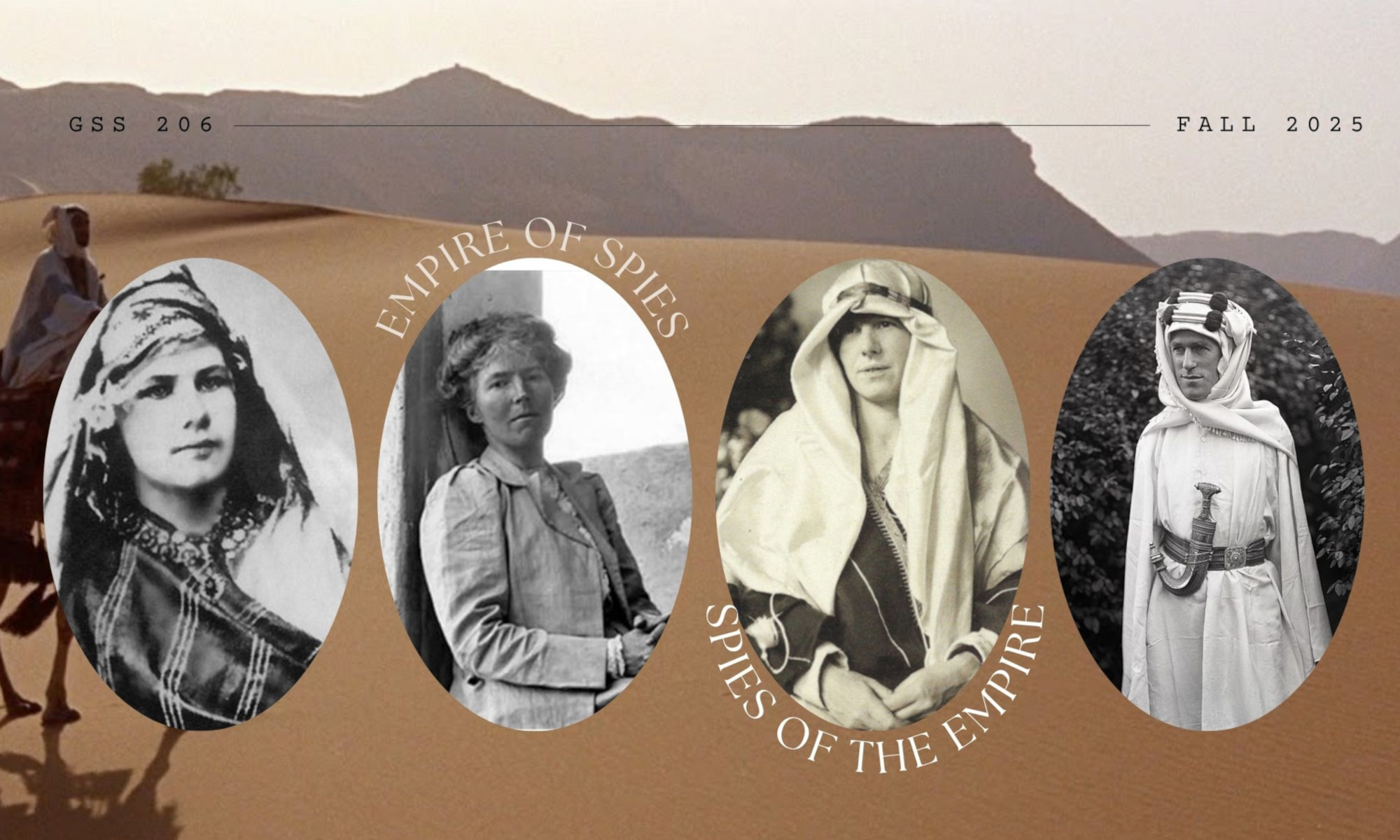
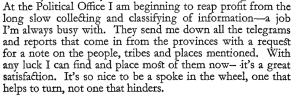
Gertrude Bell demonstrated self-awareness in her role as an agent and as an instrument of empire. She wanted to play a useful role and, in her letters, mentions several times that when she feels she is busy and productive, she is happier, but when there is a lack of work to be done or her duties are minimized, she falls into frustration and sadness. She seems to find purpose in being part of a grand scheme, in her words, “It’s so nice to be a spoke in the wheel, one that helps to turn, not one that hinders.” What does it mean to romanticize one’s own work, especially when that work is being an intelligence officer for the British Empire? This ties too to Bell’s tendency to romanticize the local people and their culture, and the archaeology and history of the region.
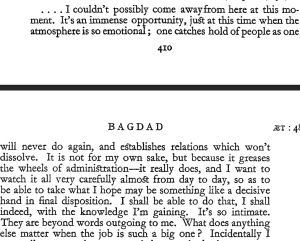
Bell emphasizes interpersonal networks, human intelligence, and building relationships, all of which are concrete ways to create and maintain imperial control, but she projects a sense of romantic adventure onto them. She frames herself not as an imperial oppressor, but as one who studies and interacts with local cultures to build relationships and foster positive developments for them. Was this how she justified her work internally? Does this affect the ethics of how her work played out, and how she was perceived by both sides (the local people and the British Empire)? Her relationship with the local people in some ways was ethical, and in other ways served imperial designs – the duality of Bell’s work is important to understanding her, because she did display a genuine appreciate and care for local people and heritage, but it does not negate the influence and the consequences of her role as an agent of the British Empire.

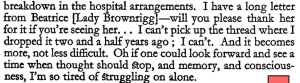
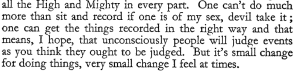
Bell’s work was also beset by a frustration over gendered constraints, and her own personal restlessness. She felt simultaneously thrilled by her work and trapped by limits imposed on her. She did not want to “sit and record”, she yearned to explore and be active – demonstrating the tension between her ambitions and the patriarchal, restrictive environment she grew up in and worked for. Through her letters, frequent references to minutia like the temperature, clothing, and accommodations all reveal her mounting agitation and a sense of containment, which she sought to escape. Her work also takes a toll on her personal life. She mentions loneliness and the difficulty in reconnecting with an old friend. Bell seeks to remain stoic, especially externally, and blames herself whenever this image falters. She sets high standards on herself, even to her own detriment. Her service of empire comes too at a high personal cost.
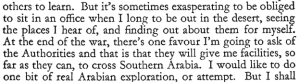
In closing, we might consider Bell’s fascination with the Near East. She was drawn to its ancient history and to its extant cultural traditions – yet paradoxically, in The Desert and the Sown, describes “the Oriental” (the Arab) as like an “overgrown child”. Does Bell fully buy into the imperialist British mindset of bringing civilization to the local people? She is fascinated with ancient Mesopotamia, while her daily work constructs a new, modern nation-state, designed to serve the British Empire’s regional interests. Her affection towards this land is inextricable from her own participation in destroying its capacity for independence. Her work as an archaeologist and in setting up a museum to maintain artifacts, as well as her insistence that the majority of them remain in Iraq rather than be sent abroad, show that she did genuinely value the cultural heritage of local people, and wanted them to maintain a degree of agency over their own relics. Today, in archaeology and in museology, provenance and cultural heritage are crucial factors. It is important to integrate respect both for the ancient aspects of a region and the modern people that this cultural heritage belongs to.
The following two quotes show the paradox of Gertrude Bell – on the one hand, as someone who appreciated the human connection she found with the local people, and on the other hand, as someone who proudly served the British Empire, and sought to further its dominion over the land and people of Iraq.
“But it’s a wonderful thing to feel this affection and confidence of a whole people around you.”
“…whatever our future policy is to be we cannot now leave the country in the state of chaos which we have created, no one can master it if we can’t.”
Letter excerpts from The Letters of Gertrude Bell Vol. 1 and Vol. 2.

What a fabulous close read of the letters and thoughts expressed by Bell in them and in her her other writings. It is fascinating that she realized–as the last line you quote from her letters indicates–that she did realize that the British–her beloved Empire of Good, based on Discipline—had in fact,caused chaos for the natives of the regions it purported to bring order to.