Spring 2013 Team
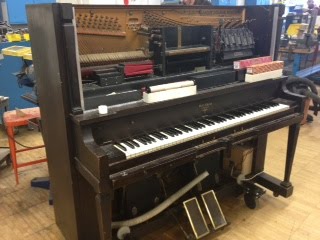
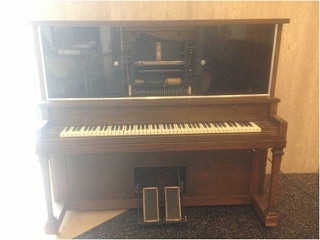
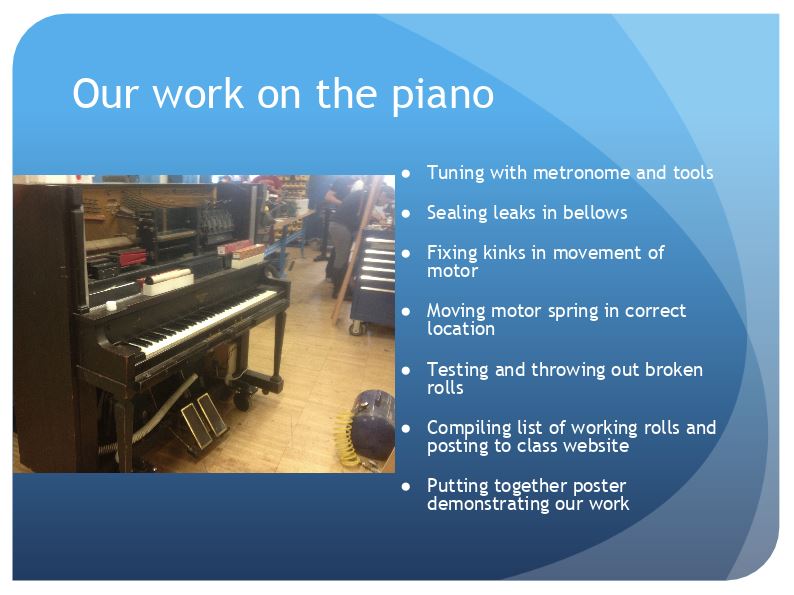
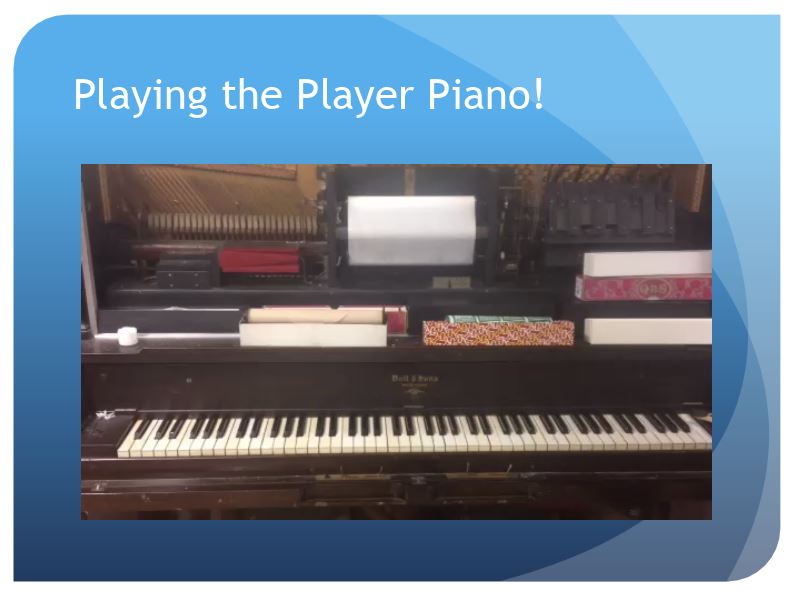
The Player Piano Team is restoring two mechanical player pianos that play themselves. Although both pianos are now in working condition, they are being tuned, vacuum leaks are being filled, and mechanical problems are being fixed. One of the player pianos can currently be found in the Engineering Quad Cafe at Princeton University.
Spring 2013 Team Goals
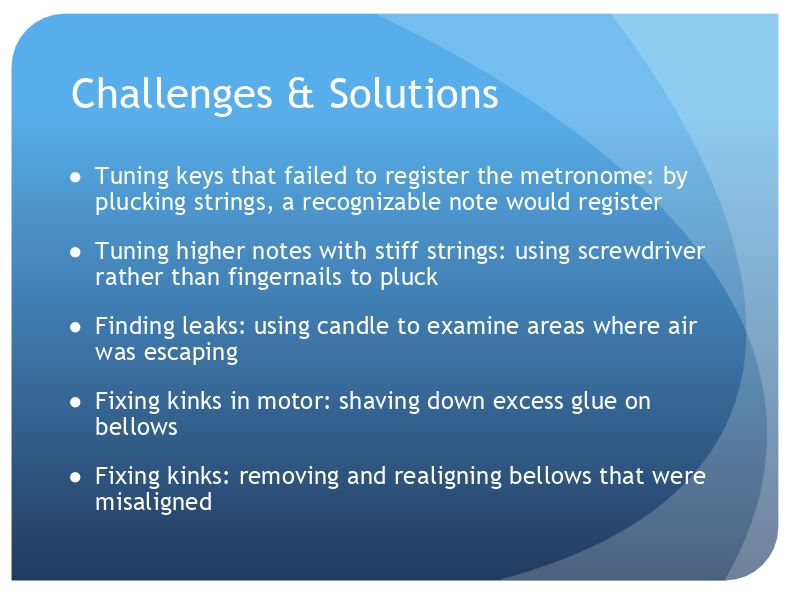
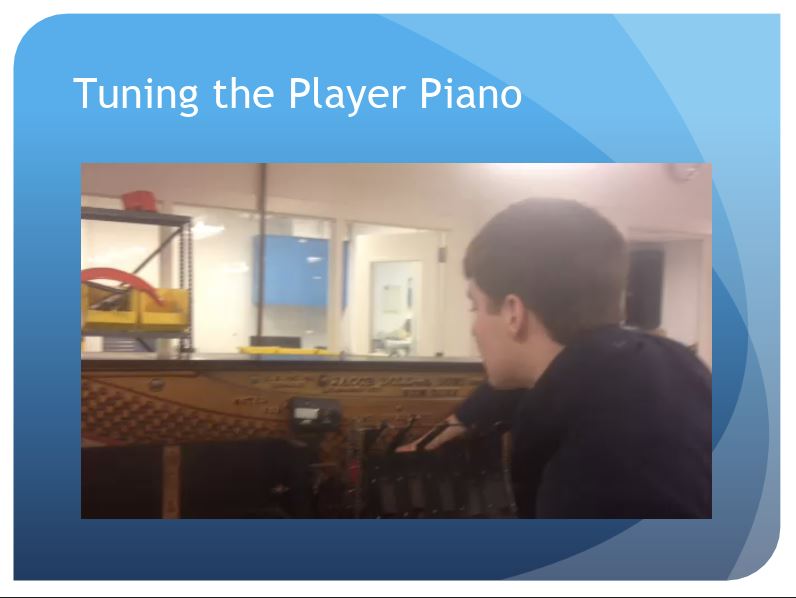
- Finish tuning the pianos upstairs and downstairs and make any other necessary repairs
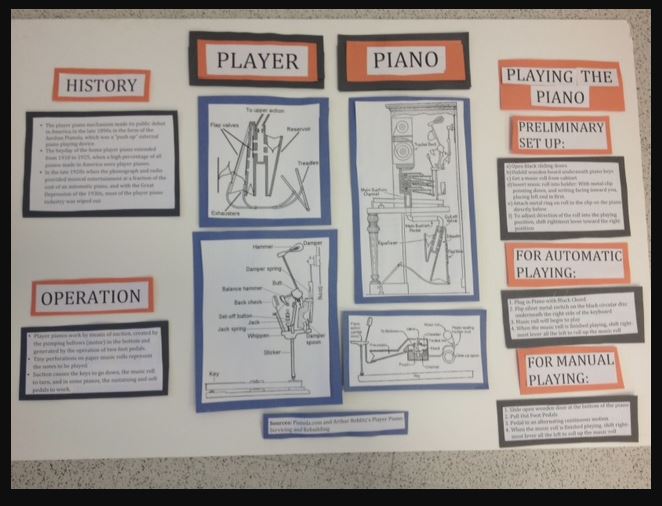
- Make a poster about how the player piano operates
- Practice playing the piano and prepare a demonstration on the piano for EPICS
History
- The player piano mechanism made its public debut in America in the late 1890s in the form of the Aeolian Pianola, which was a “push up” external piano playing device
- The heyday of the home player piano extended from 1910 to 1925, when a high percentage of all pianos made in America were player pianos
- In the late 1920s when the phonograph and radio provided musical entertainment at a fraction of the cost of an automatic piano, and with the Great Depression of the 1930s, most of the player piano industry was wiped out
Operation
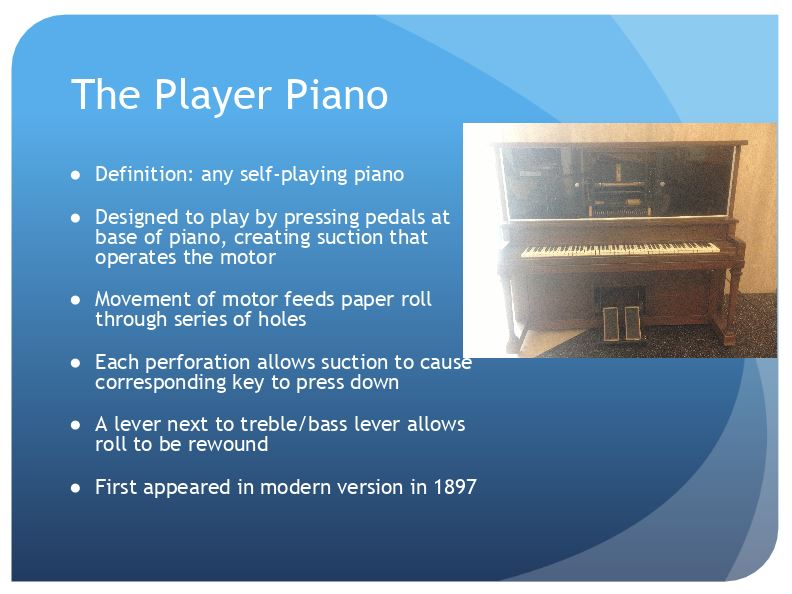
- Player pianos work by means of suction, created by the pumping bellows (motor) in the bottom and generated by the operation of two foot pedals
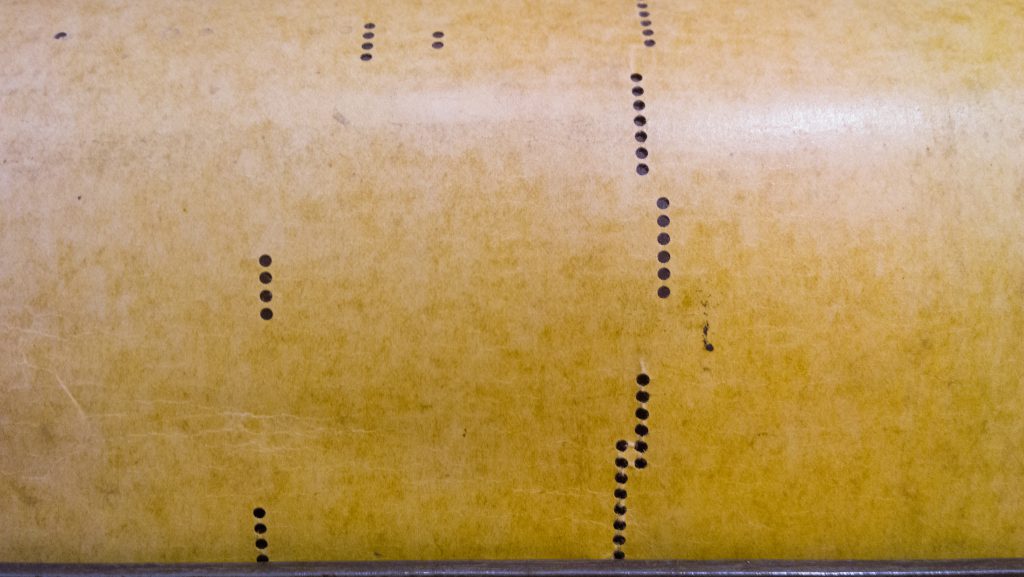
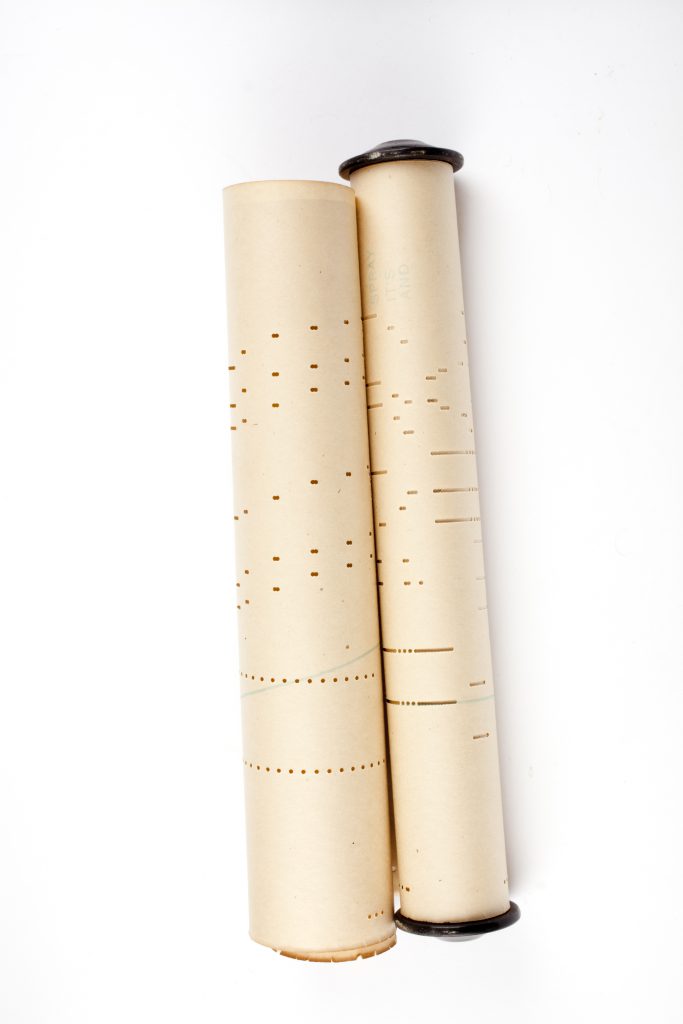
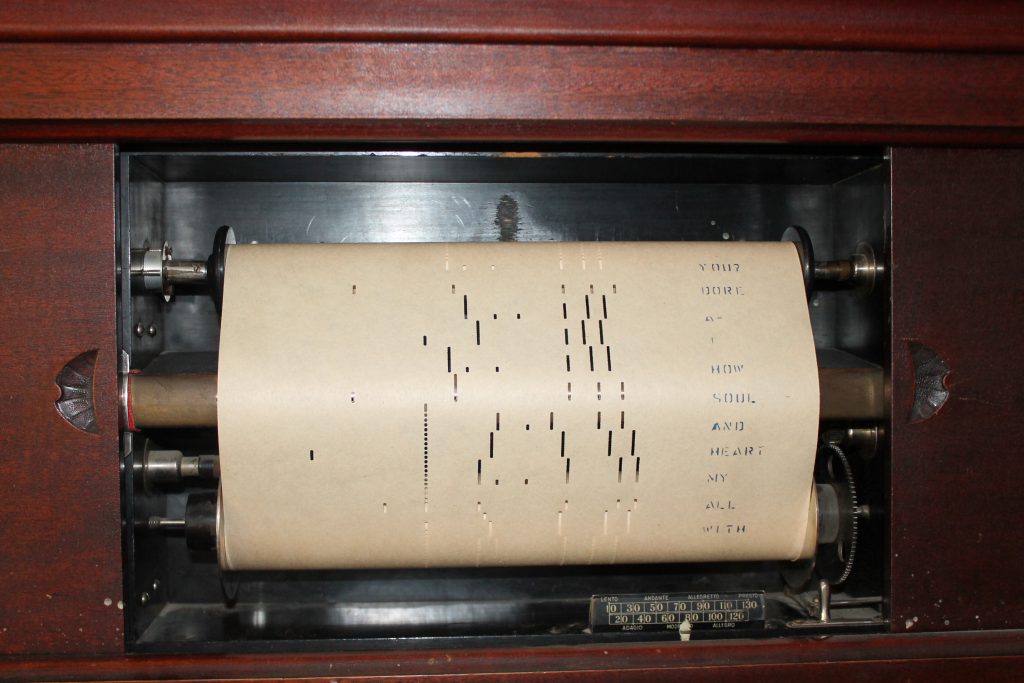
- Tiny perforations on paper music rolls represent the notes to be played
- Suction causes the keys to go down, the music roll to turn, and in some pianos, the sustaining and soft pedals to work
Steps for Playing the Player Piano
Preliminary Setup:
- Open black sliding doors
- Unfold wooden board underneath piano keys
- Get a music roll from cabinet
- Insert music roll into holder: With metal clip pointing down, and writing facing toward you, placing left end in first.
- Attach metal ring on roll to the clip on the piano directly below
- To adjust direction of the roll into the playing position, shift rightmost lever toward the right position
For Manual Playing:
- Slide open wooden door at the bottom of the piano
- Pull Out Foot Pedals
- Pedal in an alternating continuous motion
- When the music roll is finished playing, shift right-most lever all the left to roll up the music roll
For Automatic Playing:
- Plug in Piano with Black Cord
- Flip silver metal switch on the black circular disc underneath the right side of the keyboard
- Music roll will begin to play
- When the music roll is finished playing, shift right-most lever all the left to roll up the music roll
Sources: Pianola.com and Arthur Reblitz’s Player Piano: Servicing and Rebuilding
Song list
Working Rolls:-Bill Bailey Won’t you please come home. Composed by Hughie Cannon Played by Scott & Waters. -Irish washerwoman. Composed by Leroy Anderson. Played by J. Lawrence Cook
-Too-Ra-Loo-Ra-Loo-Ra! That’s an Irish Lullaby. Composed by James Royce Shannon. Played by Frank Milne
-(When You and I were) Seventeen. Composed by Gus Khan – Chas. Rosoff. Played by Harold Scott.
-Polka Favorities (Pennsylvania Polka, Beer Barrel Polka, Too Fat Polka). Played by J. Lawrence Cook.
-Medley of Favorite Irish Songs (Where The River Shannon Flows, My Wild Irish Rose, When I Dream of Old Erin). Played by Walter Redding.
-Roses of Picardy. Composed by Fredrick Weatherly. Played by Scott & Watters.
-Country Favorites (For the Good Times, Release Me, Heartaches By The Number). Composed by Ray Price Played by Lopez, Holmes & Cook.
-Mother Machree. Composed by John McDermott. Played by Frank Milne
-Test Roll
-Rockabilly Hits (Heartbreak Hotel, GI Blues, Blue Suede Shoes). Composed by Elvis Presley. Played by J.L. Cook & J. Watters
-La Bamba. Composed by Ritchie Valens. Played by Rudy Martin.
-The Daughter of Rosie O’Grady. Played by Walter Redding.
-Begin the Beguine. Played by J. Lawrence Cook.
-Sweet Violets. Composed by Joseph Emmett. Played by Ted Baxter.
-A Little Bit of Heaven Shure They Call it Ireland (How Ireland Got Its Name). Composed by Earnest R. Ball. Played by Walter Redding.
-Galway Bay. Composed by Steve Earle. Played by J. Lawrence Cook.
-Let The Rest of the World Go By. By Willie Nelson. Played by Lee S. Roberts.
-Did Your Mother Come From Ireland. By Bing Crosby. Played by J. Lawrence Cook.
-Lida Rose – Meredith Wilson’s “The Music Man.” By Meredith Willson. Played by J. Lawrence Cook.
-Your Cheatin’ Heart. Composed by Hank Williams. Played by Jeff Waters.
-House of the Rising Sun. Composed by The Animals. Played by John Sloan.
-Black Hawk Waltz. Composed by M.E. Walsh. Player not noted.
-Peer Gynt, Op. 55. Composed by Edvard Grieg. Player not noted.
-Not Long Ago. By Brost & Feinberg. Played by Cliff Hess.
-Lincoln Highway. By Harry J. Lincoln.
-What a friend we have in mother. Composed by Chas. E. Roat, Copr. Roat. Played by Robert Billings.
-Beer Barrel Polka. Composed by Jaromír Vejvoda. Played by J. Lawrence Cook.
-Abide With Me. Composed by Henry Francis Lyte. Played by Roger Helliard.
-All my Life. Fox Trot in F. David. Played by Henry Lange.
-Pal of my Cradle Days. Montgomery-Piantadosi.
-Dream of Heaven. A.W. Bauer.
-Tomorrow Morning (Fox Trot). Composed by young and Squires. Played by Pete Wendling.
-Ave Marie. Composed by Charles Gounod.
-Drowsy Waters. Composed by Wailana. Played by Jack Ailau.
-The Invincible Eagle. Composed by John Church. Played by Sousa.
-Ceska Ozvena. Composed by A. Brousek. Played by Valcik.
-Show me the way to go home.
-Eighteen Hundred and Sixty-Three. By Calvin.
-Oh, How I Laugh When I Think How I Cried About You. By Waterson, Berlin & Snyder Co.
-I’ve Got the Joys. By Akst. Played by Bertha Walker.
-Devil’s March. By Suppe.
|