Tōmatsu Shōmei 東松照明 (1930–2012)
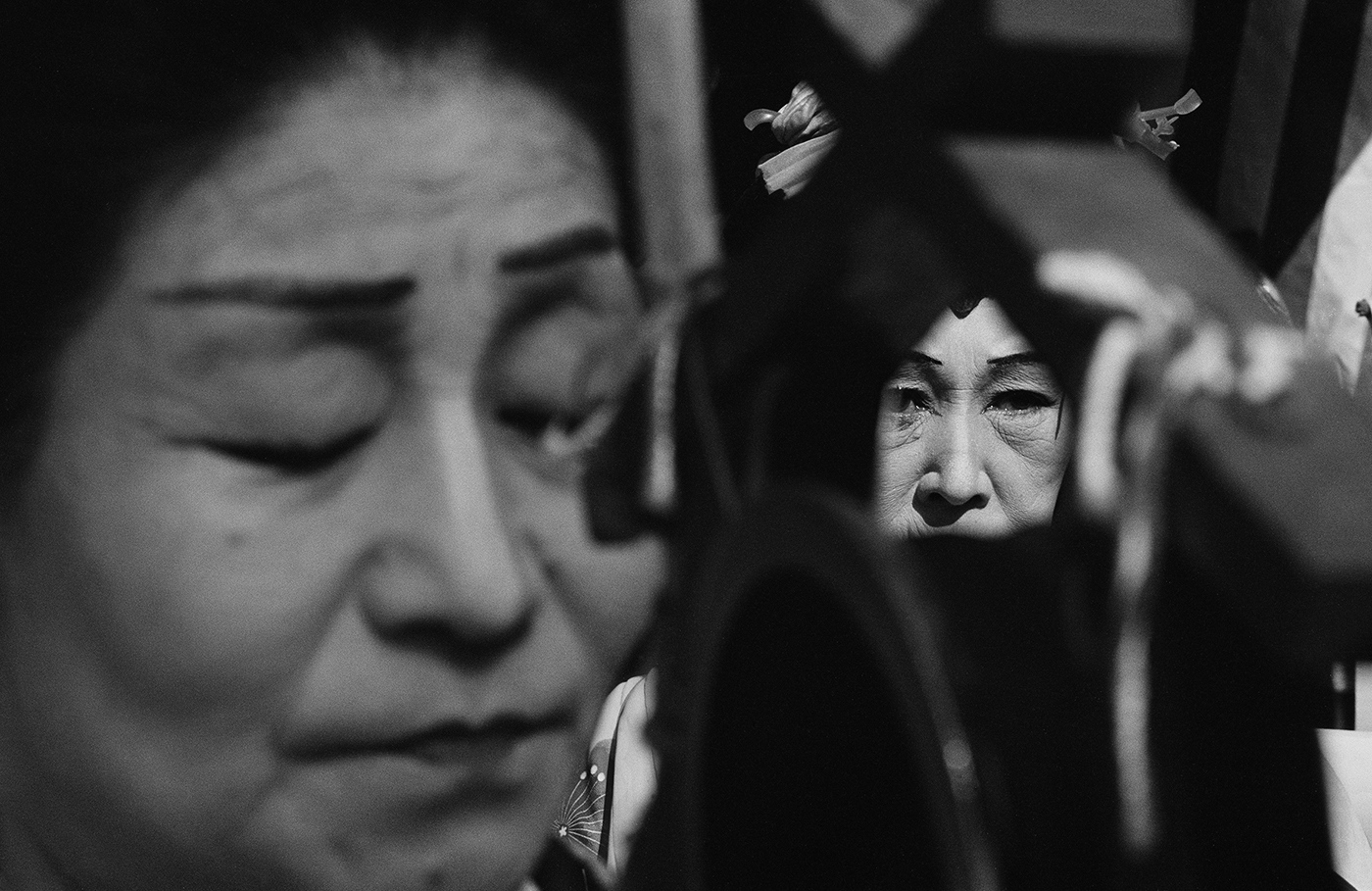
Sandwich Men (Chindonya 4), Tokyo, 1961, printed 1988
Gelatin silver print
image: 28.4 x 41.7 cm. (11 3/16 x 16 7/16 in.)
sheet: 41 x 50.8 cm. (16 1/8 x 20 in.)
Princeton University Art Museum. Museum purchase, gift of Robert Gambee, Class of 1964
© Estate of Shomei Tomatsu
This photograph comes from Tōmatsu Shōmei’s 1961 series that document the chindoya ちんどん屋 performers on Japanese streets. The chindoya are actors and musicians, usually in groups, who wear elaborate kimono and play traditional instruments such as gong and drum to advertise for shops on the streets of commercial districts. A convention that can be traced to the late Edo period, the chindoya performance experienced a decline in the twentieth century, due to the challenges of economic depression, war, and new forms of advertisement such as newspaper, television and neon signs on streets.[1] After WWII, the 1950s witnessed a brief revival of the chindoya performance followed by a continuing decline starting from the 1960s. Tōmatsu took the chindoya series in 1961 when the tradition was on the edge of the downtrend. In this series, Tōmatsu tactfully addresses the cultural dilemma of the chindoya performers in between the cultural and economic modes of Edo-era Japan where it was rooted and an increasingly Westernized and Capitalized society in contemporary Japan.

Fig. 2-1. A chindonya performer in Akita, Japan. Photo Japan / Alamy Stock Photo.
In this photograph, instead of recording a moment that best characterizes the cheerful chindonya performance, Tōmatsu captures one fragment of it––a close-up of the faces of two chindonya performers in rather spontaneous and provocative expressions, which make the viewer wonder about the inner minds of the two performers and the state of the cultural tradition that they stood for at the time. In terms of composition, this photograph can be divided into roughly two parts and three picture planes. The left half of the image is dominated by the face of a chindonya performer looking downwards and lies in the middle plane. Though her face is out of focus, her somewhat exaggerated makeup and her facial expression are not difficult to perceive because of the sheer size of her face. The slightly blurry, soft-focus quality of her image corresponds with her melancholy expression to insert into the photograph a dejected atmosphere that is at odds with a typical chindonya performance. On the right of this photograph, the face of another chindonya performer in the background plane is framed by the triangular top part of a typical traditional Japanese drum in the foreground, one that was probably carried by the chindonya performer shown on the left side of the image (Fig. 2-1). The chindonya performer in the background plane is captured in sharp focus, and every detail––including the wrinkles on her face under thick makeup, her headdress in the upper part of the photograph and the cherry blossom pattern on her kimono––is clearly seen. While dressing in elaborate garments and playing supposedly cheerful music, the chindonya performer shows an absentminded and even bewildered expression. The spontaneous expressions of the two chindonya performers––an inattentive one and a slightly distressed one––reveal an extremely intimate and private moment in the middle of a public, commercial performance.
Moreover, the faces of the two chindonya performers also resonate with each other to reflect a complicated, perplexed state of mind of the performers that is symbolic of the predicament of the declining chindonya tradition and the traditional Japanese culture in general in presence of the forceful Western, especially American culture in contemporary Japan––a theme that Tōmatsu constantly returned to throughout his career. The way that Tōmatsu juxtaposes one face with a Japanese drum and frames another face through this loud instrument associated with an exuberant atmosphere further accentuates the contrast between the joyful, booming music that was performed and the silenced, dispirited faces of the performers. As both the trifold structure of this photograph and the English title of this series, Sandwich Men, suggest, the impoverished chindonya advertiser-performers were sandwiched, both visually and metaphorically, in between the remnants of an unreachable past and signs of a rapidly changing contemporary society in both cultural and socio-economic senses. So unitedly integrated in one image formally through the framing strategy, the three motifs––the performer in the background, the performer in the middle ground and her drum in the foreground, nevertheless, betray the social and cultural incongruities of Japanese society in the early 1960s.
[1] For more information, see Chapter 2, “Chindonya” ちんどん屋, in Shun’ya Yoshimi and Akihiro Kitada, ed., Rojō No Esunogurafi: Chindon’ya Kara Gurafiti Made 路上のエスノグラフィ: ちんどん屋からグラフィティまで (Tōkyō: Serika Shobō, 2007), 112–188.
Start the discussion