Eric Skotnes is a Los Angeles-based mural and graffiti artist. His art engages in social and environmental themes, typically in subtle but recognizable ways. His specialization in enormous murals, typically spanning tens or even many hundreds of feet for his larger projects, is an especially unique practice, as it is innately open to the public.
With regard to the history of mural art, contemporary muralism can largely be traced to Mexican Muralism, an artistic movement which was funded by the Mexican government in the wake of the Mexican Revolution. These murals developed in rebellion against the traditionally private nature of art, with the intention of ensuring public availability of art. As was and still is the case, wealthy collectors often purchase and hide away the most valuable art so that it may never be seen by the public, regardless of the artist’s wishes. However, the mural is an essentially egalitarian art form that resists being made private. Mexican Muralism thrived throughout the twentieth century and would influence other later art movements, including the Chicano art movement of the 1960s and 70s.
The Chicano art movement positioned murals and graffiti into a particularly significant place within the history of Los Angeles, due to the city’s status as a Chicano cultural center. Los Angeles served as a base for the emergence of Chicano art collectives such as Asco, which used performance art and mural art to participate in social, political, and environmental protest. I believe Los Angeles serves as a particularly unique location for the development of muralism and graffiti due to the vast canvas provided by the concrete expanse of the Los Angeles Basin. By far the largest piece of mural art in Los Angeles, for example, is the Great Wall of Los Angeles Mural, which spans a total of 2754 feet along the sloped concrete sides of a tributary of the Los Angeles River.
Eric Skotnes continues this rich history of muralism and graffiti in Los Angeles within the the environmental context of the city, intertwined with the social context of its diverse community. He even brings his artistic style to cities around the world, weaving a sense of local richness into his murals to capture the nature of each place he works in. Here I present several of his works, including both murals and graffiti art, which encapsulate these social-environmental themes.
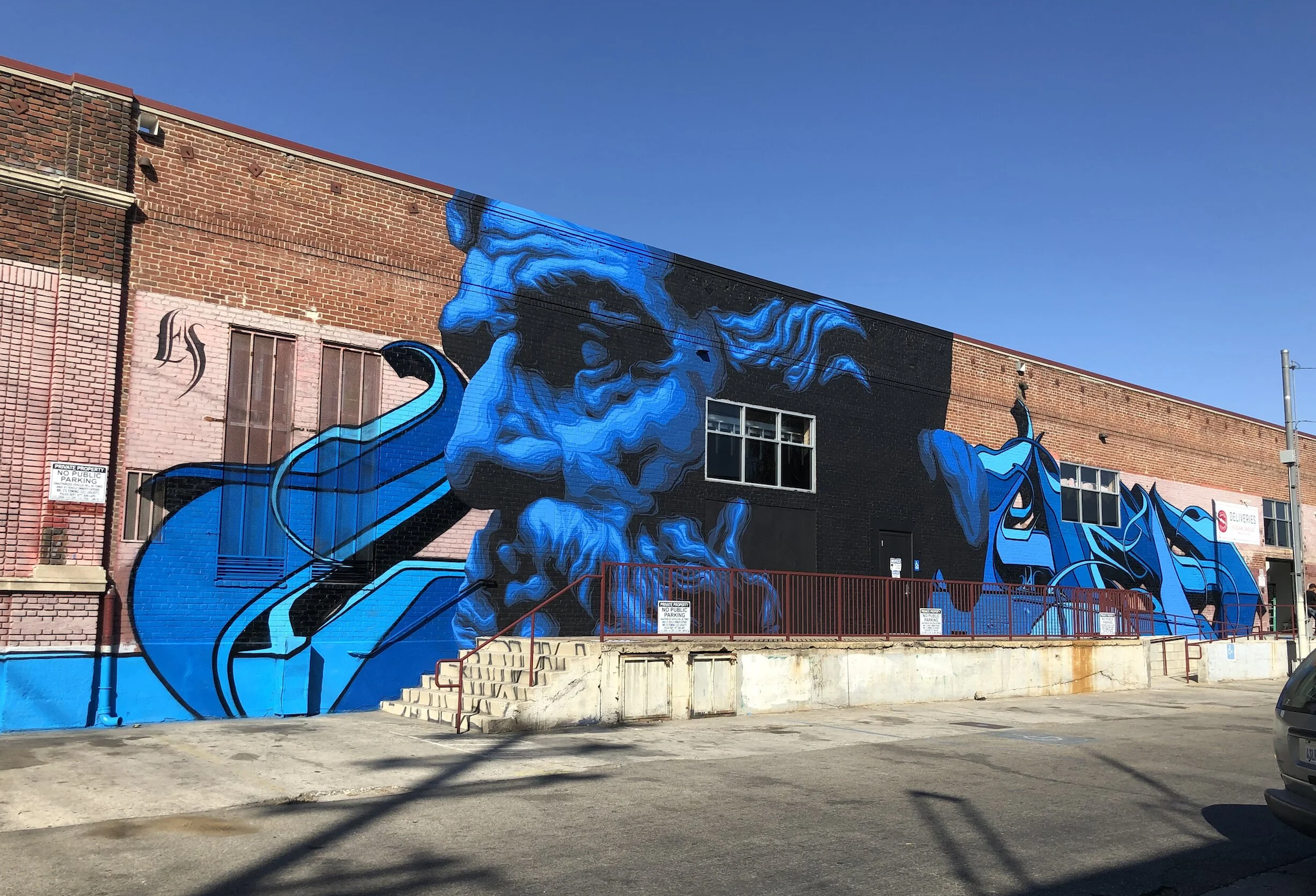
Blue Zeus, 2019
Blue Zeus is a 2019 eco-mural in south L.A at Avalon and 62nd, which depicts a blue figure of the Greek god Zeus. He painted the work in collaboration with UCLA the art collective INDECLINE. What makes this work an eco-mural is that it is coated with a special solar-reflective coating that reduces surface temperatures. It is designed to call attention to the environmental problem of the urban heat island effect, where cities experience unusually high temperatures due to urban infrastructure and buildings. The surfaces of buildings and urban infrastructure, including roads, sidewalks, parking lots, walls, and roofs, combined with the lack of vegetation, results in an environment that is poor at dissipating heat. This urban heat, combined with climate change, results in increasingly dangerous heat waves. In this sense, this work is very direct in its message promoting a sustainable urban environment.
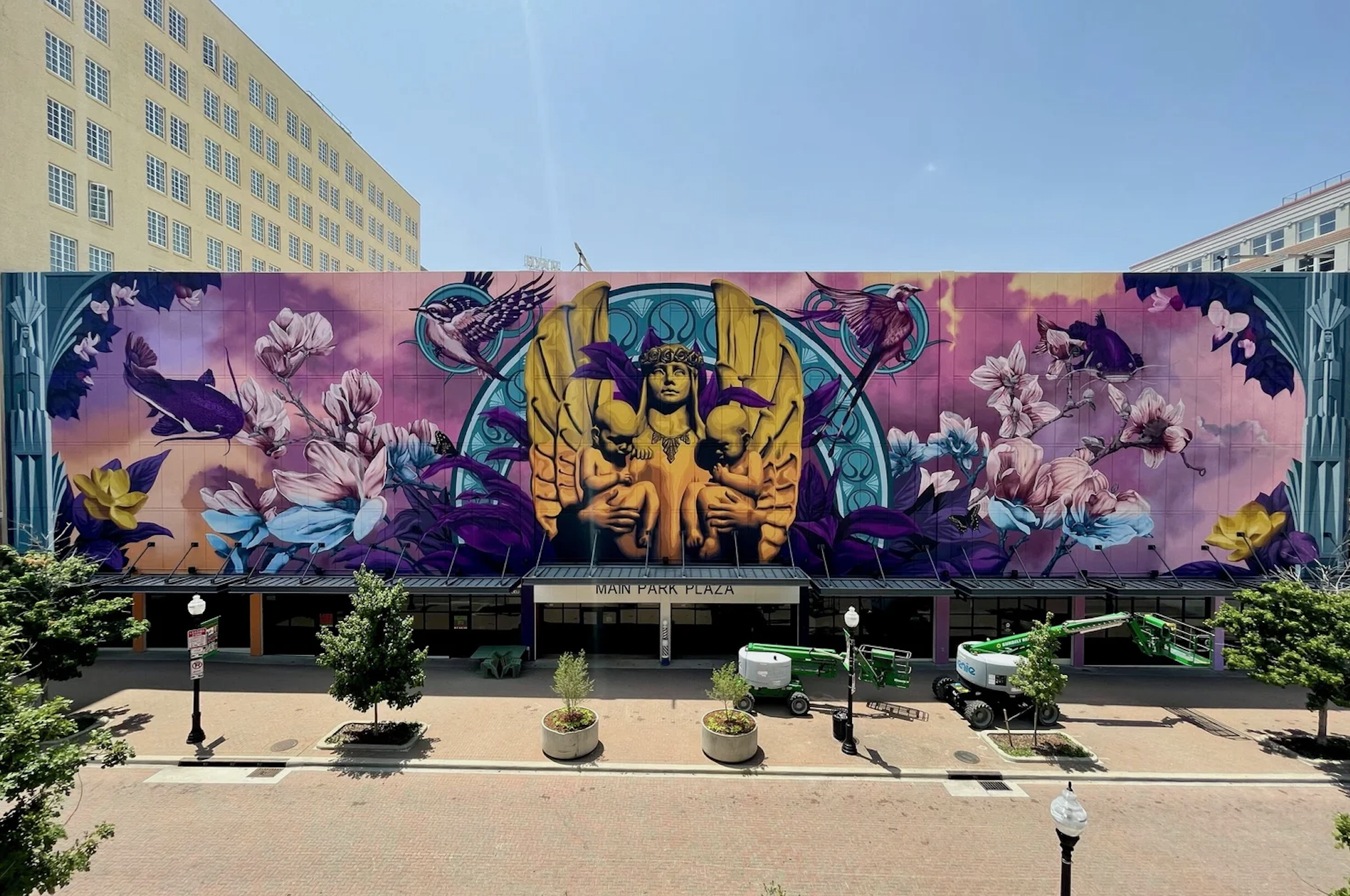
The Majestic, 2021
Leaving L.A. for a second, The Majestic is a mural in Tulsa, Oklahoma. Commissioned by the city of Tulsa, the mural depicts an angel holding two infants flanked by various species of native flora and fauna. The Majestic essentially envelopes humanity within mother nature, conveying the identity of Tulsa’s people through the wildlife of their geography. As seen in many of Eric Skotnes’s murals, he often paints vibrant flowers, juxtaposed against their concrete urban setting, reminding cities of the thriving native wildlife that preceded the modern urban sprawl.
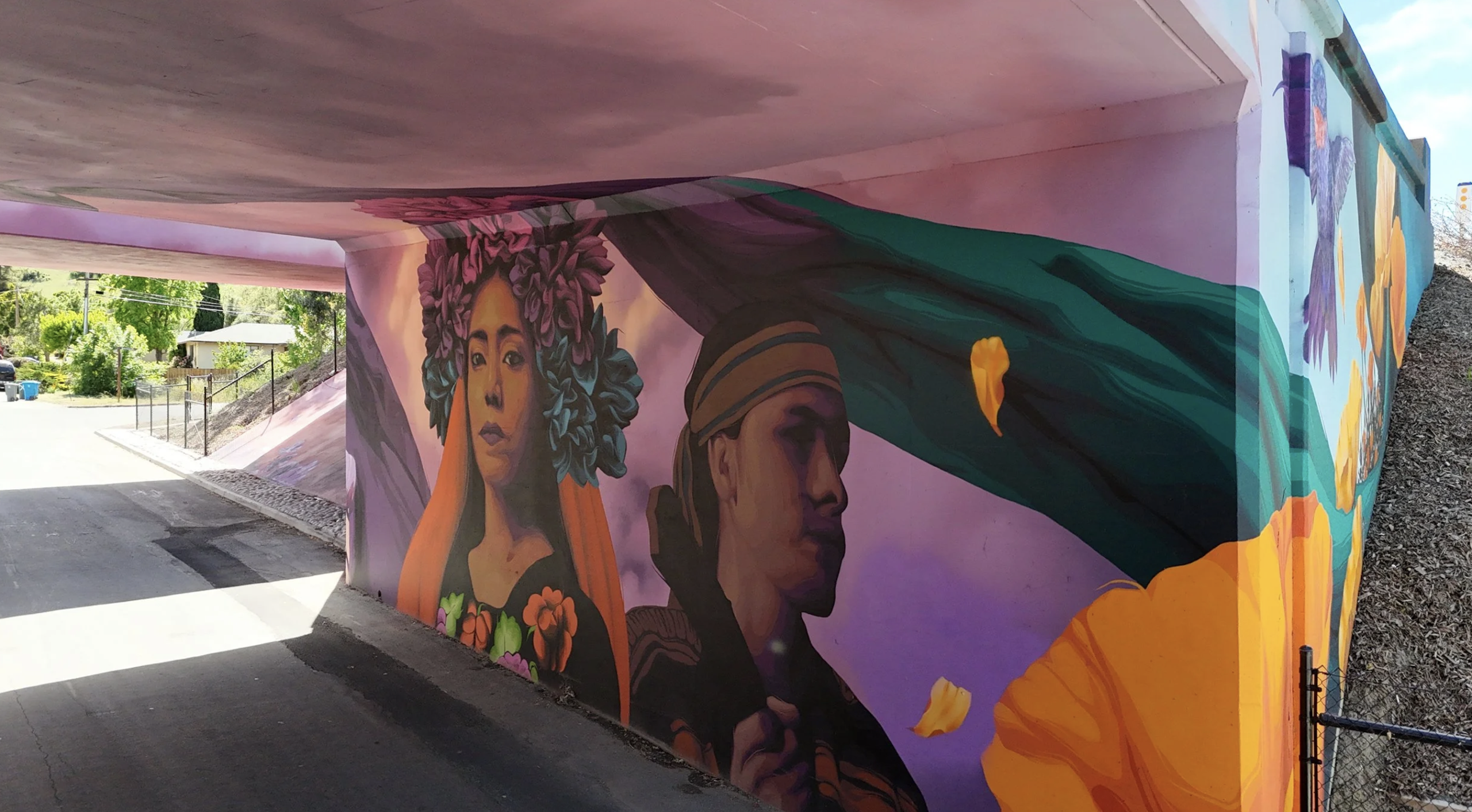
Fabric of Life, 2023
Returning to California, Fabric of Life is a mural in the town of San Juan Bautista. The mural is all about the town’s cultural and environmental history, from its pre-colonial roots and its founding under the Spanish Empire, to its years under an independent Mexico and now its modern life in the state of California. Erik Skotnes represents the diverse peoples that have defined the town’s history, combined with native flowers of the region. Although the town has only 2000 people and is far from any big city, the mural still clearly expresses a sense of urban environmentalism. The mural is under a concrete overpass, clearly reflecting similar murals and graffiti found in Los Angeles. A choice very characteristic of his style, Eric Skotnes beautifully depicts an environmental and human history in juxtaposition with the brutal artificiality of concrete transportation infrastructure.
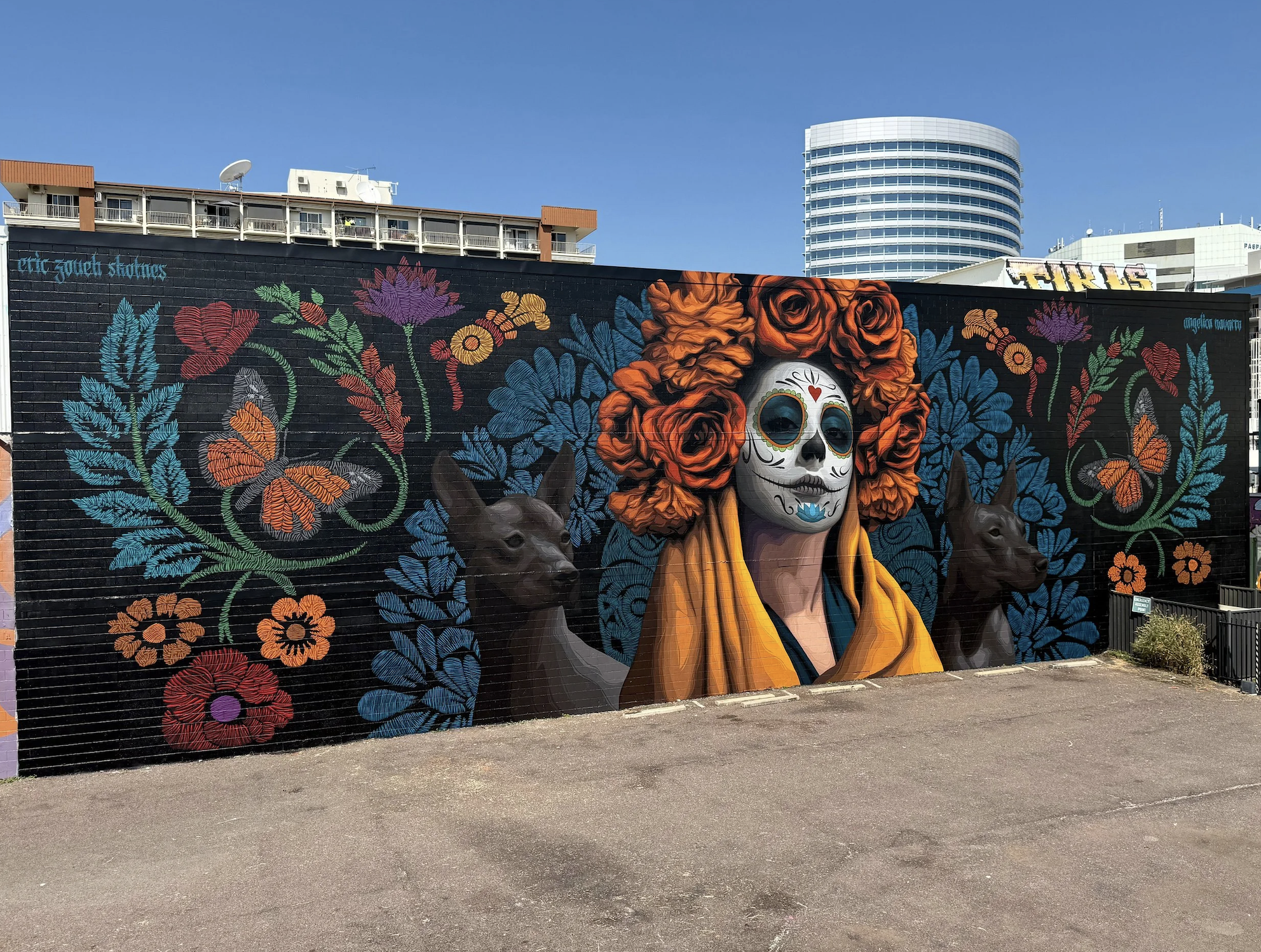
Dia De Los Muertos, 2025
Bringing a bit of L.A. cultural spirit with Australia, Dia De Los Muertos is a mural made for the 2025 Darwin Street Art Festival. The mural depicts a woman wearing calaveras makeup for Dia de los Muertos, along with monarch butterflies and floral decorations emblematic of the holiday. Here, Eric Skotnes shares the cultural heritage of this Mexican, and by extension Los Angeleno, celebration with the people of Darwin, Australia. Dia de los Muertos has an interesting environmental essence as it centers around the cycle of life and death, expressed through motifs such as plants, flowers, animals, and bones. There is something to be said about the human impact on this life and death cycle.
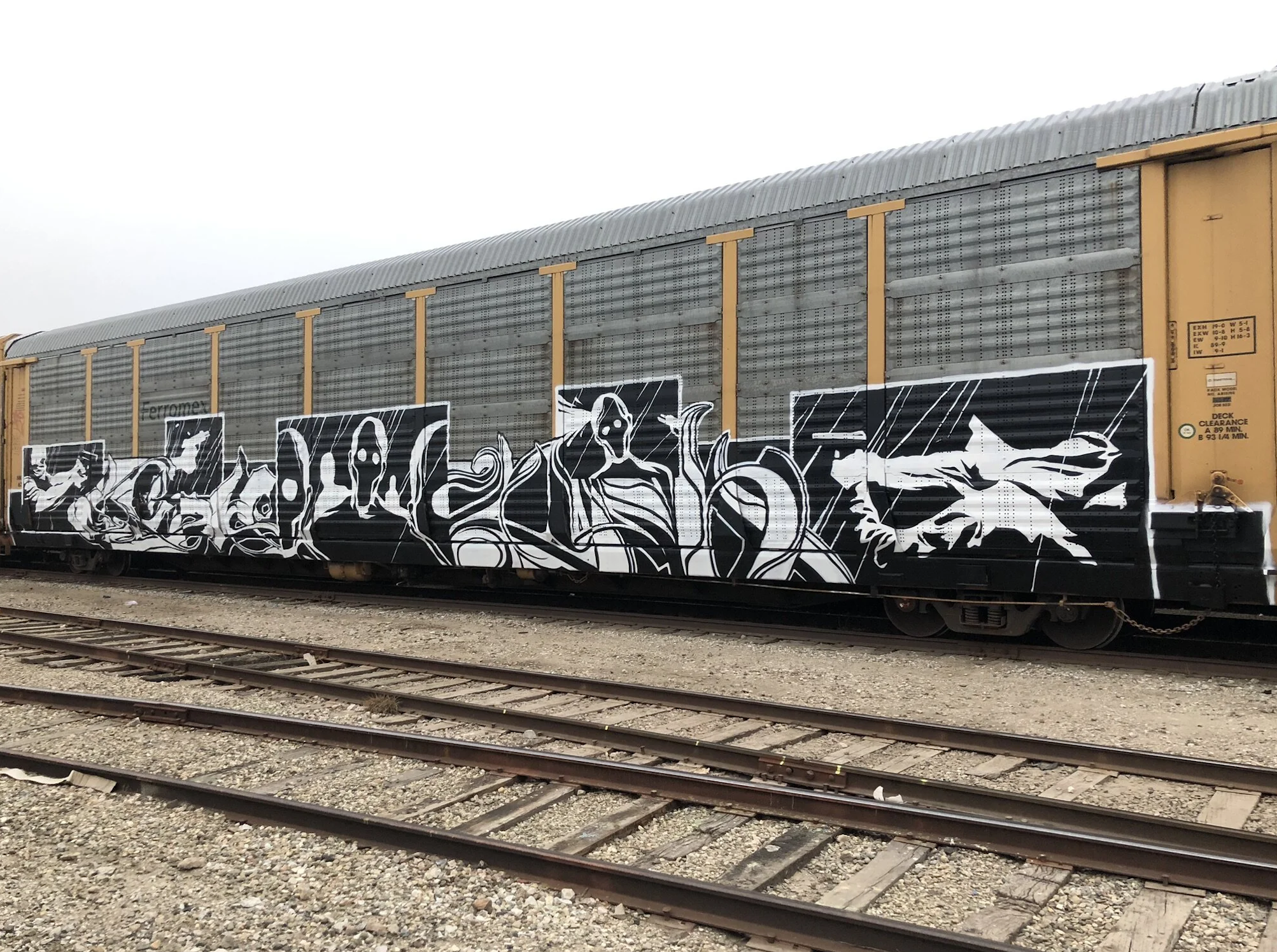
Untitled rail car graffiti
Of the many pieces of graffiti Eric Skotnes has made, this particular piece spray-painted on a rail car in L.A., has interesting environmental undertones. As one of the primary modes of transport for bulk goods, freight rail to and from the port of LA often carries minerals, oil, gas, and other resources drilled from the Earth. Freight cars often serve as a canvas for graffiti, bringing attention to their role in resource extraction and the global economy as a whole.
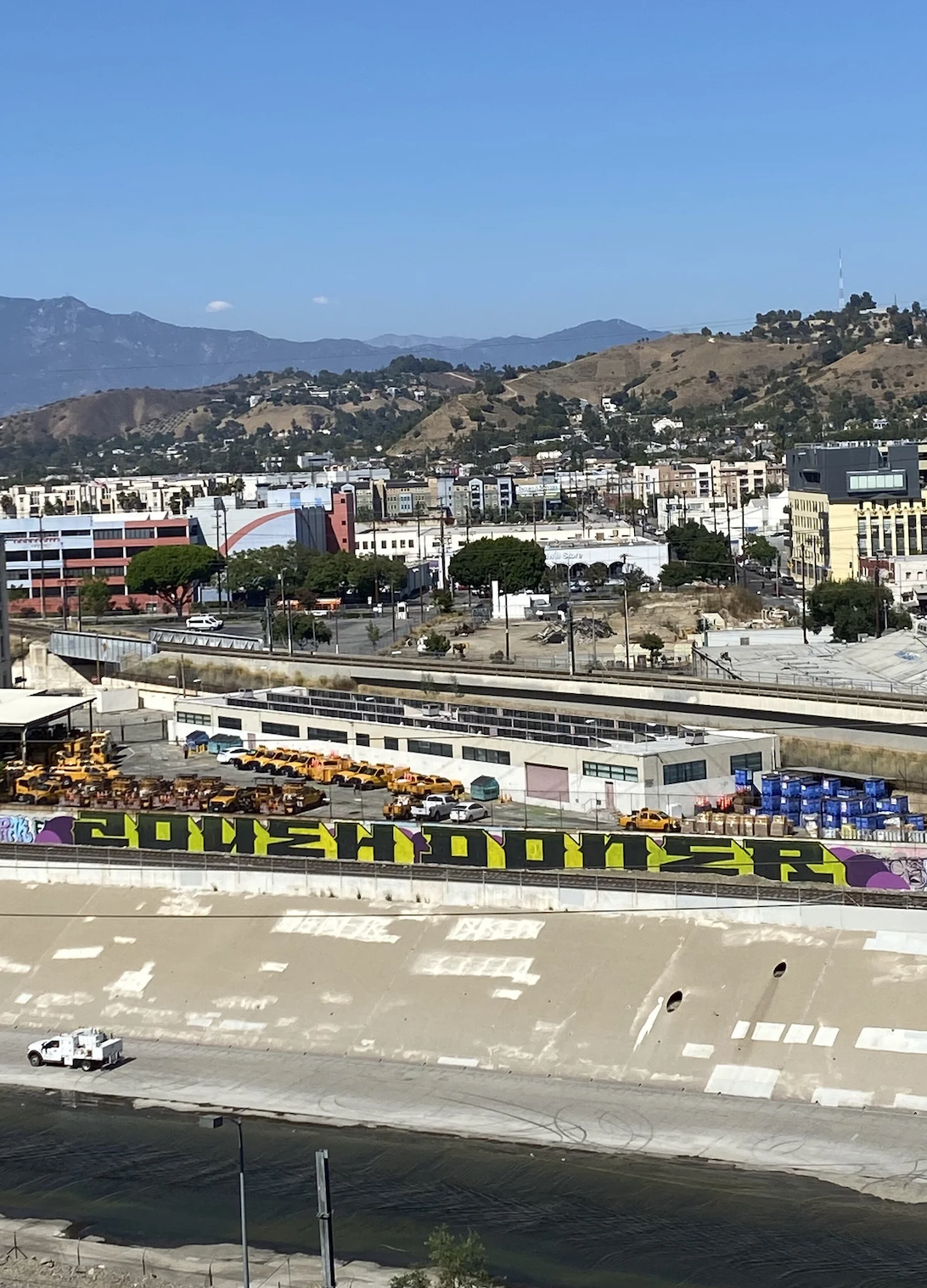
Untitled LA river graffiti
The L.A. river is unique not due its natural beauty but rather its manmade construction. In order to tame the unpredictable and destructive floods of the L.A. river, the Army Corps of Engineers built a 50-mile long concrete channel to contain it, completing the channel in 1960. There is something impressive about an entire river being turned to concrete, paved flat like roads and parking lots. Its earthen river banks and vegetation have been entirely replaced by a giant gray slab, a perfect canvas for graffiti of all kinds.
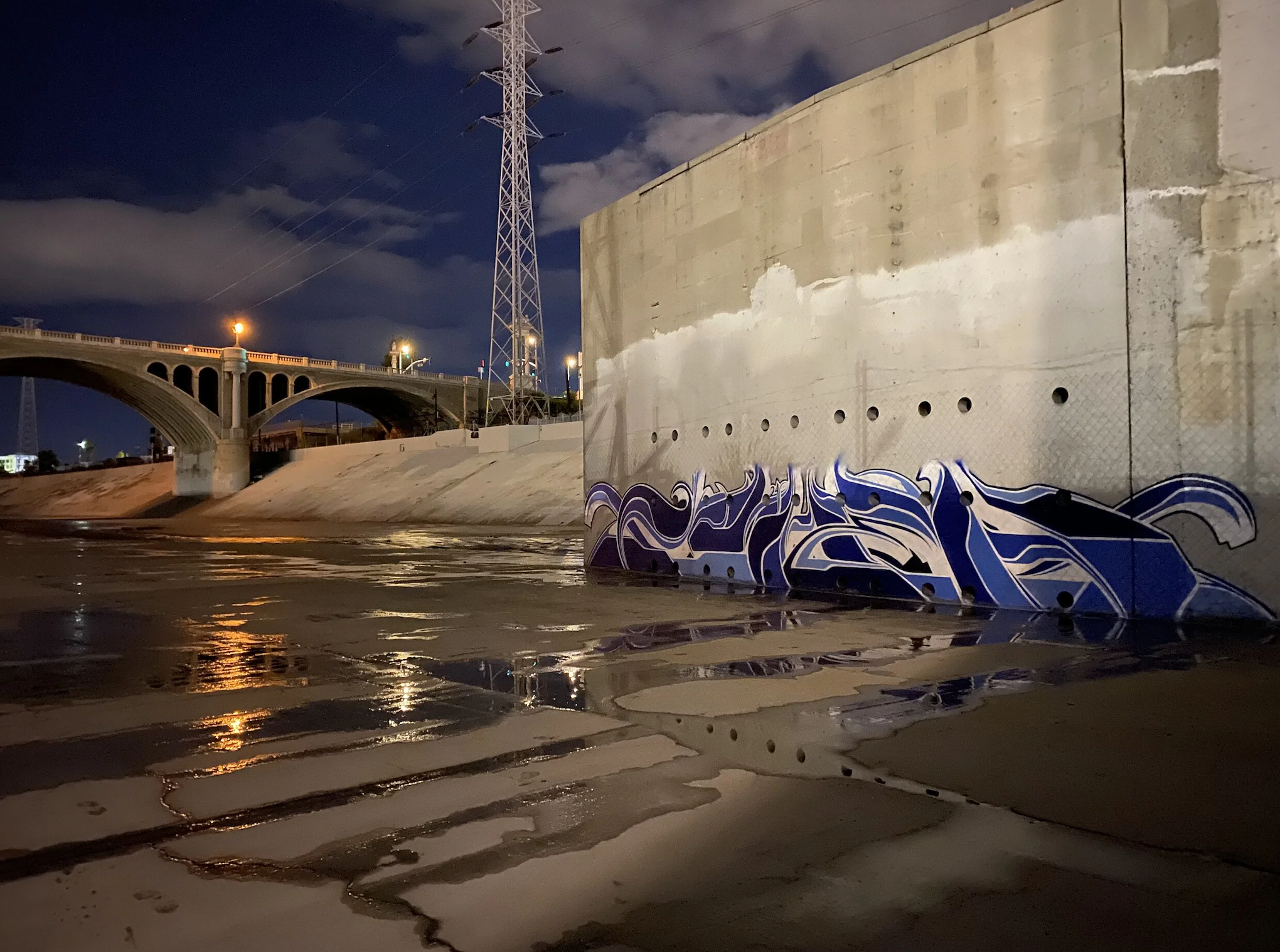
Untitled LA river with Bridge graffiti
This is another graffiti piece along the L.A. river, this time focusing on the bridges that cross the river. In the background is the North Broadway Bridge, while the graffiti itself is spray-painted on a bridge pier of the Spring Street Bridge, all brightly illuminated at night by the city lights. Like the river itself, both bridges are concrete gray. The graffiti resembles rough waves, almost anticipating the next time the river will become full, yet the vibrant blue of the waves seems out of place among the sea of concrete.
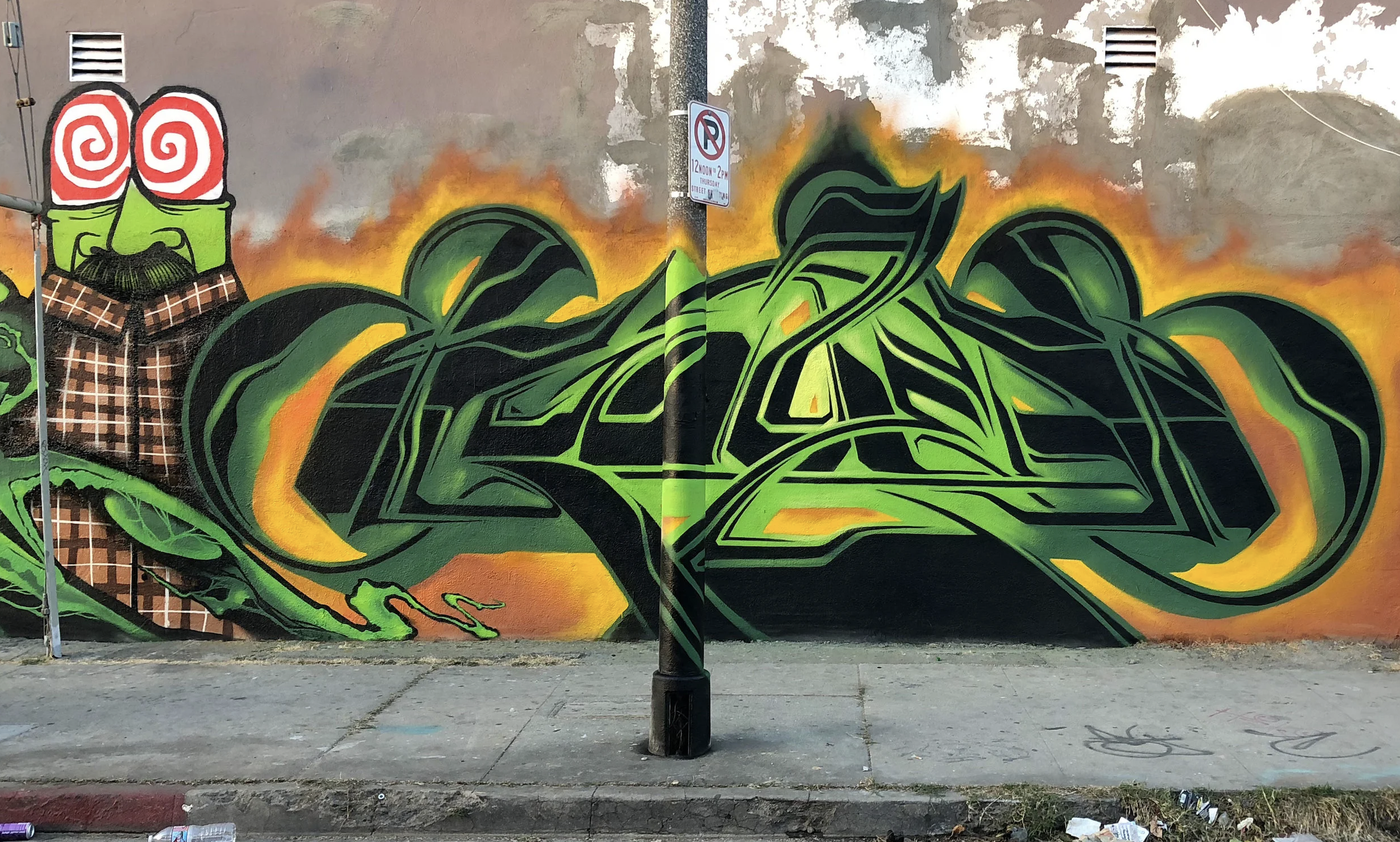
Untitled lamp post graffiti
A wall, lamp post, and a curb are one of the most dull and common sites in an urban environment. Yet this piece of graffiti paints them a vibrant green with a fiery background, bringing this one corner of the city to life. As is often the case, all kinds of plastic, metal, and paper litter is spread along the curb. Meanwhile weeds struggle to grow from between the cracks of the concrete sidewalk, reminding urbanites that cities are still built upon an Earth.