Introduction
In an increasingly tech driven world, many have questioned how the role of art will change as technology grows larger in the cultural consciousness. Some artists have responded by leaning further into traditional techniques, disregarding mechanization altogether. Others have fully embraced this tech revolution, creating works solely in the digital world. Artist Mel Chin walks this line, intertwining art and tech to explore how they can can together be used to address ecological issues. Chin was born in Houston, Texas and is currently based in North Carolina. Truly a multi-disciplinary artist, he creates work ranging from sculptural installation to delicate pencil drawings.
The range of Chin’s works and materials serve to encompass the wide range of climate change effects. Climate change is a complex and interconnected issue—one small change in the environment can have far reaching effects for all forms of life on the planet. By exploring a variety of artistic mediums, Chin is able to address this web of cascading effects, visualizing the effects of climate change and the earth’s potential futures.
Much of Chin’s work also serves a functional ecological purpose, like his use of hyperaccumulator plants or the projects he does with local communities. In doing so, he pushes the boundaries of what artistic expression can look like, calling attention to the ways in which we can look at our own environmental impact through a different lens. In Chin’s work, technology becomes art and art becomes a call to action for the audience. Chin immerses the viewer in other worlds, both those of exciting possibility and those with terrifying implications. It is in these worlds that one is lead to question our current one: how can we avoid future environmental degradation and what innovations could lead to positive ecological action? Through his creativity and artistry, Chin tackles these looming questions.
State of Heaven (1990)
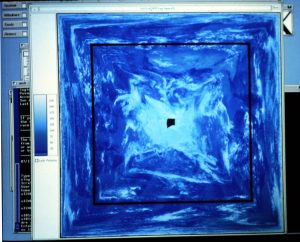
This conceptual proposal piece weaves together digital modeling with fabric weaving techniques and installation. Using scientific data on cloud patterns and the ozone layer, the “carpet” will take physical form on a massive scale. It will be put under a process of destruction to bring attention to the depletion of the ozone layer. This project visualizes a very real impact of climate change and enlists experts from both the sciences and the arts, illustrating the need for interdisciplinary thinking to enact effective environmental action.
Revival Field (1991-present)
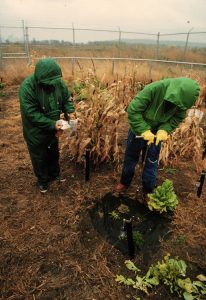
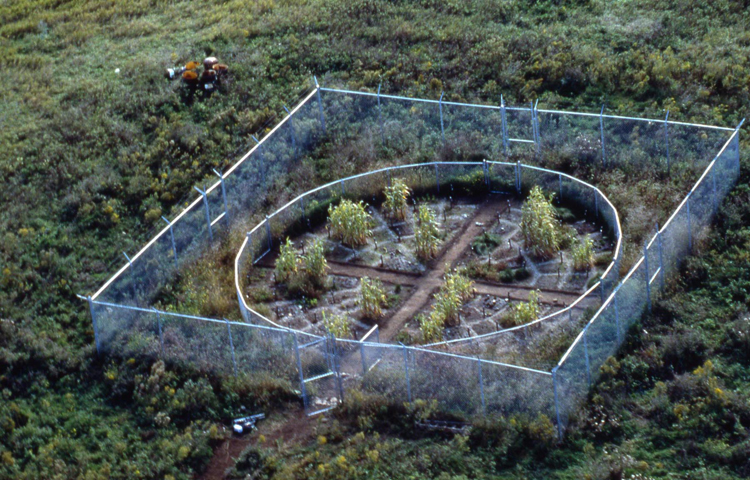
This piece first began as a conceptual project and has now moved from testing stages to ongoing installation. Revival Field uses special “hyperaccumulator” plants as tools to absorb excess heavy metals from contaminated soil. Data showed that these plants are actually an effective method of accumulating contaminants, sparking a possible new avenue of “Green Remediation”. This piece offers another example of Chin’s inventive combination of science, art, and technology to address ecological issues.
ULSAN ECO Park (1996)
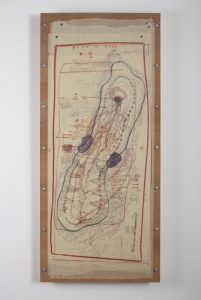
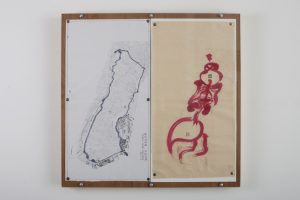
These two pieces present an alternate view of traditional landscape design and imagine how non-Western ideas of Chi can be applied to the flow of energy throughout an area. Different from his technologically-inspired or installation pieces, Topography and Calligraphic Organs of ULSAN ECO Park (Korea) and Park as Five Element Body utilize paper documents and inking techniques to convey place and movement. This alternate vision connects to the conversations we’ve had about different ways of perceiving time and land, how can these perceptions influence how we face climate change?
Unmoored (2018)
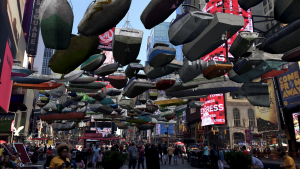
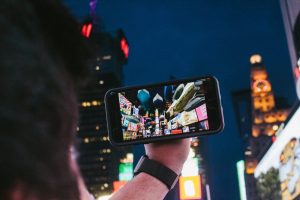
In this collaboration with Microsoft, Chin allows everyday people to view Times Square through a different lens. Unmoored uses a virtual reality cellphone app to visualize what this part of New York City would look like in a continued future of ice cap melting and global sea level rise. Boats drfit between apartment buildings and plankton float toward the audience. Both an immersive visual experience and a startling vision of climate change dangers, this piece draws viewers in and leaves them to think about what will happen if no environmental action is taken.
Wake (2018)
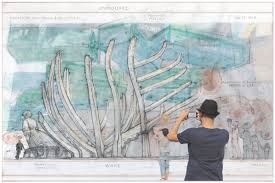
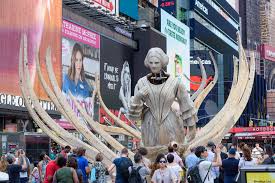
Wake serves as a starting point for the Unmoored installation. The piece is a sculptural installation in the shape of a shipwrecked boat and features a statue of opera star Jenny Lind modeled after one that was attached to the prow of the USS Nightingale. Wake brings attention to New York City’s history as a center of shipping, especially the darker side of this: the slave trade and the transport of guns. Although not as obviously ecologically oriented, the installation makes the viewer consider the past economies that have led to the current state of industry and climate. It also places the audience’s mind in the realm of the ocean, preparing them to experience Unmoored.
Revival Ramp (1996)
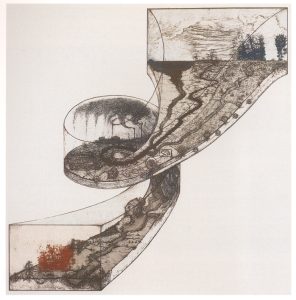
Revival Ramp visualizes the progression of earth’s ecological state. The etching takes shape as a curved path that leads to Chin’s imaginings for three potential climate futures. Both ecological and architectural, this piece draws from the looming factories of the industrial revolution and Chin’s hyperaccumulator plants from Revival Field. By visualizing climate change as a physical path, Chin brings attention to the severity of human impact on the earth and urges viewers to think about which future they would like to inhabit.
CLI-mate (2008)
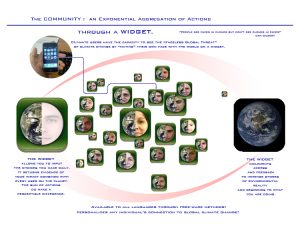
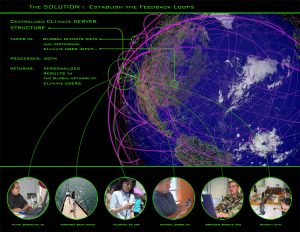
One of Chin’s conceptual pieces, this proposal uses technology to address questions of connectivity and personal motivation in relation to climate change. CLI-mate imagines a globally accessible widget that allows users to keep track of and visualize their daily effect on the environment. In an increasingly tech driven world, using personal phones as a conveyor of environmental concern could change the way we think about our responsibility, both on an individual and a collective scale.
Spirit (1994)
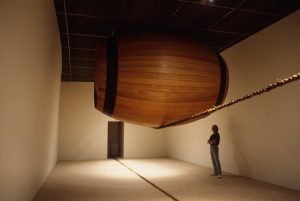
In Spirit, a massive oak barrel balances on a tightrope in the middle of a room where the walls bow inward. The barrel is representative of American consumption, an object often a vehicle for food or fuel, while the rope is braided with grasses native to the American prairie. The piece holds a literal and figurative weight, creating a visual representation of the pressure the environment is under and the role of a consumerist economy. In our current time, the earth finds itself balancing on a tightrope, one wrong move away from climate collapse.